
Urban Bridge
Location: next to the Isfahan Technology university, Isfahan, Iran
Architects: AmirHossein Ashari, Zahra Jafari, Afshin Ashari, Sahar Gharaie
3D: Zahra Jafari, Mostafa Yektarzade
Graphic: Zahra Jafari, Zahra Rahimi, Sara Nazemi, Roodabe Lotfpour
Research: Roodabe Lotfpour
Animation: Ehsan Shabani
Coordinator: Shiva Nazarboland, Asma Sirjani
Status: Concept
Date: 2021
Area: 24.200 m2
Client: Isfahan Technology University
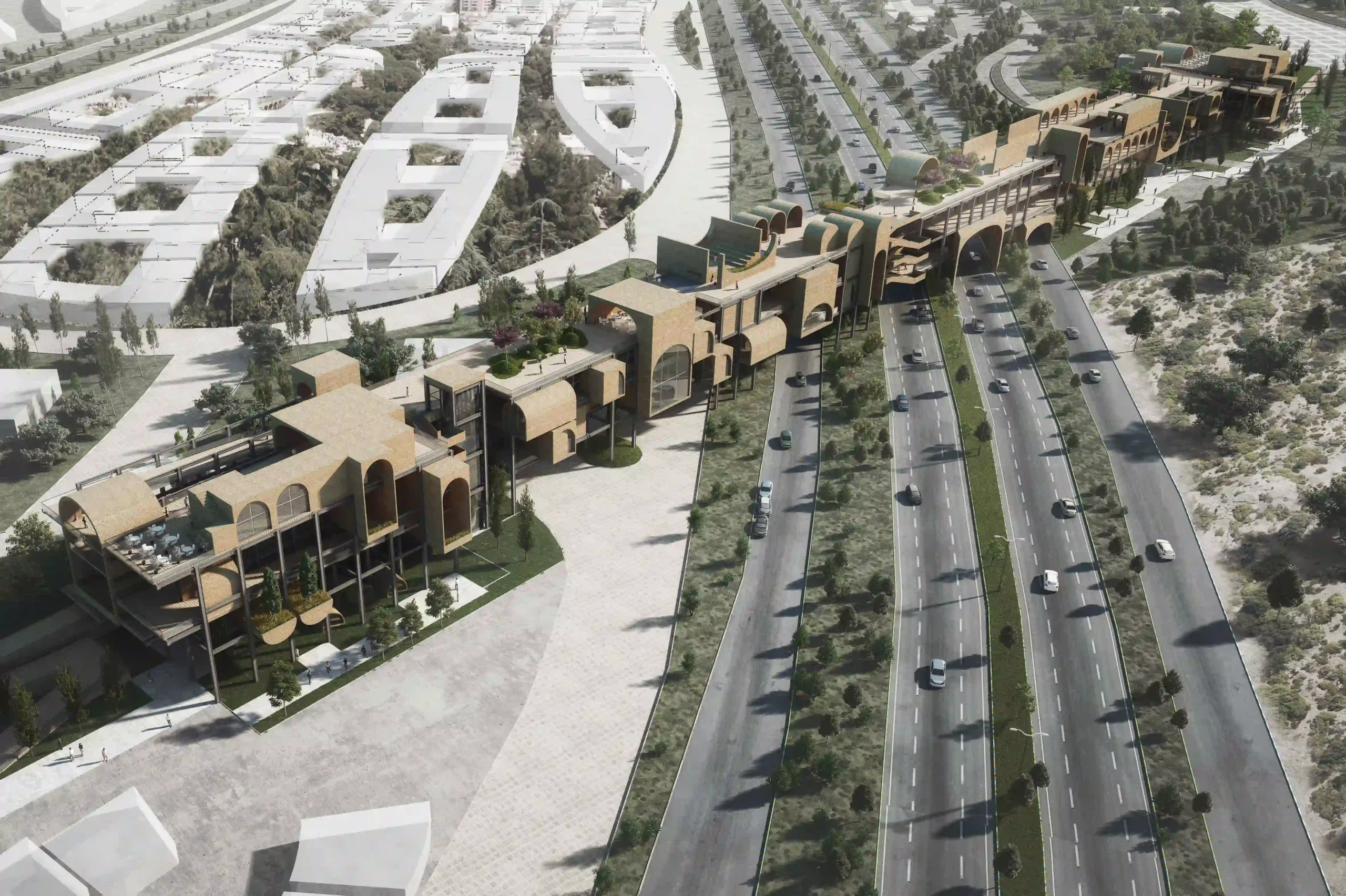
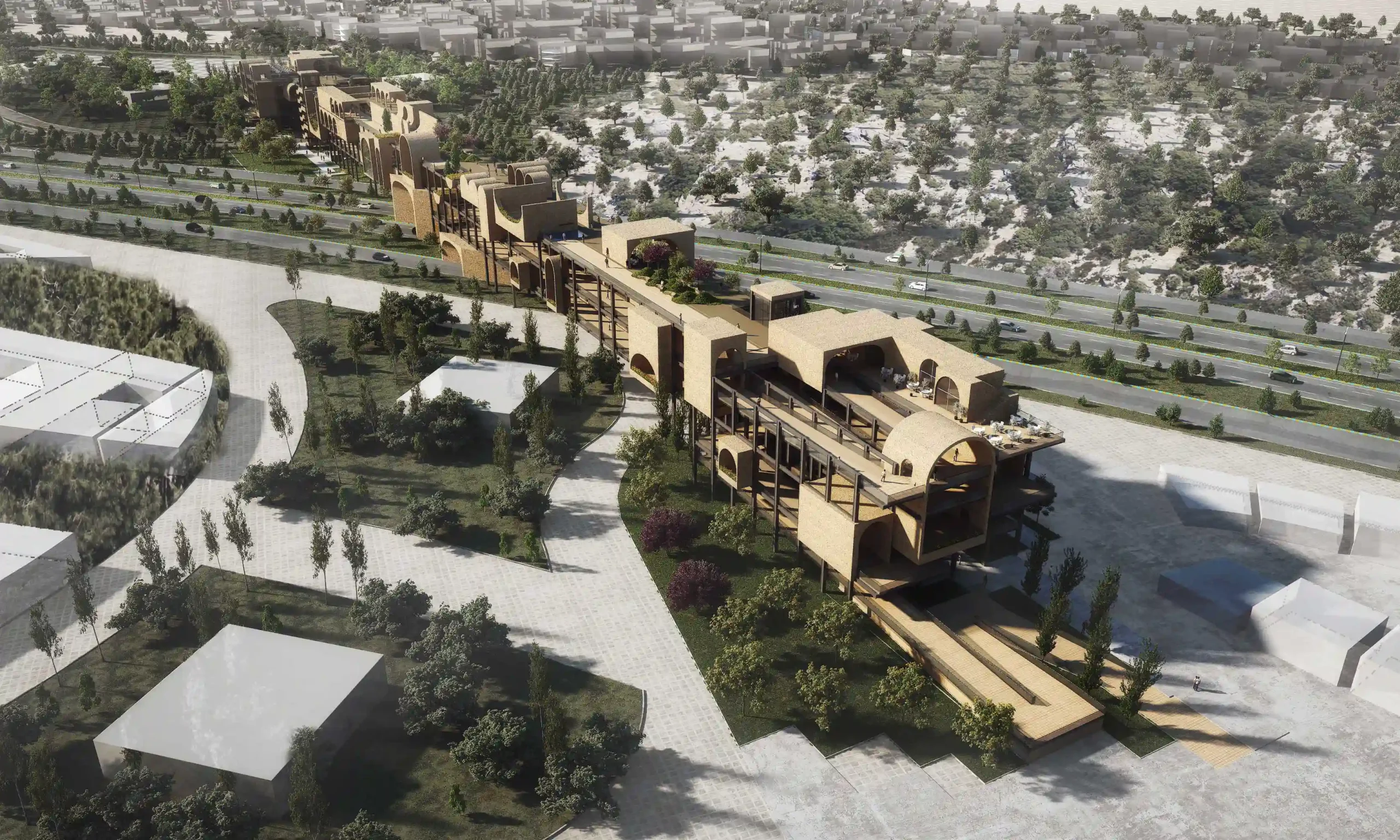
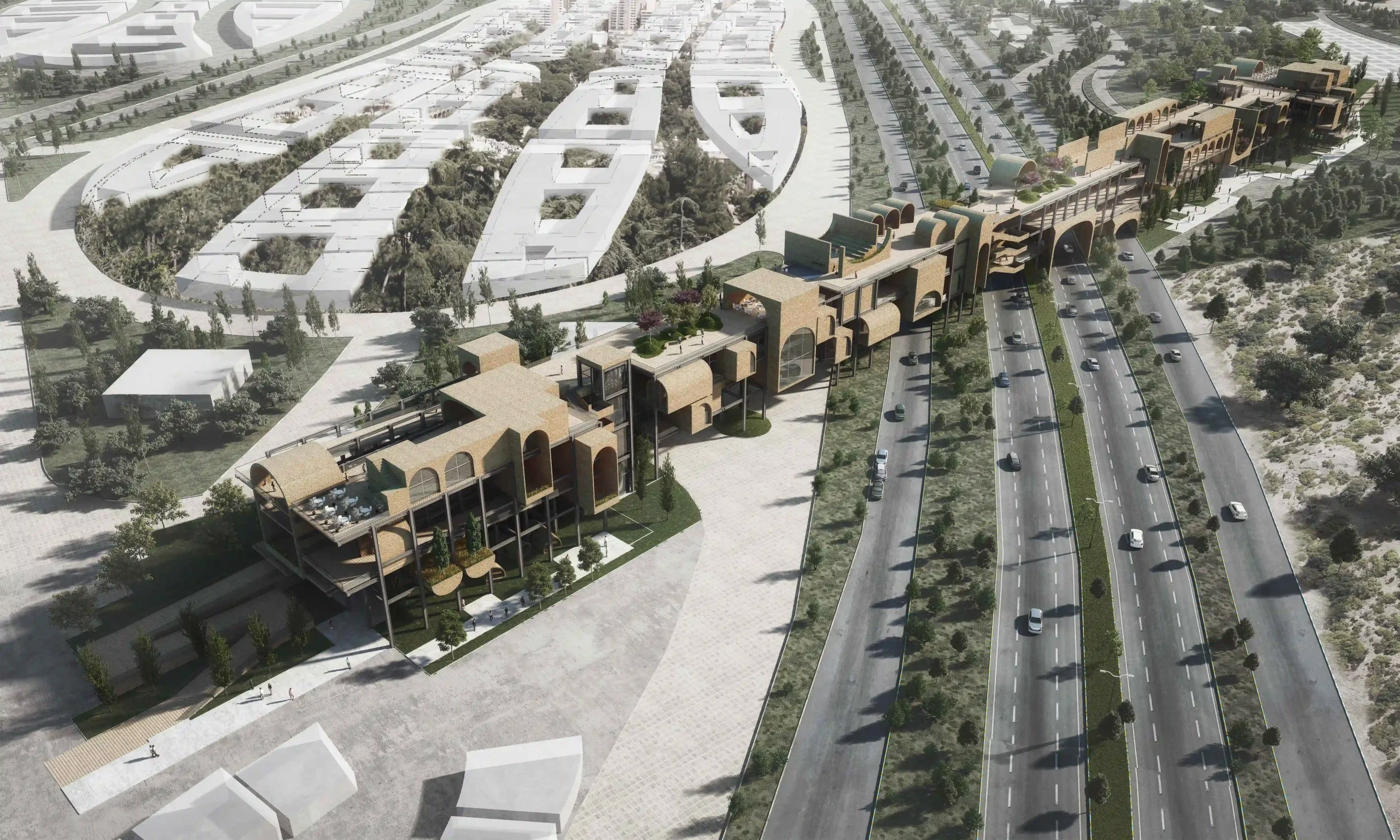
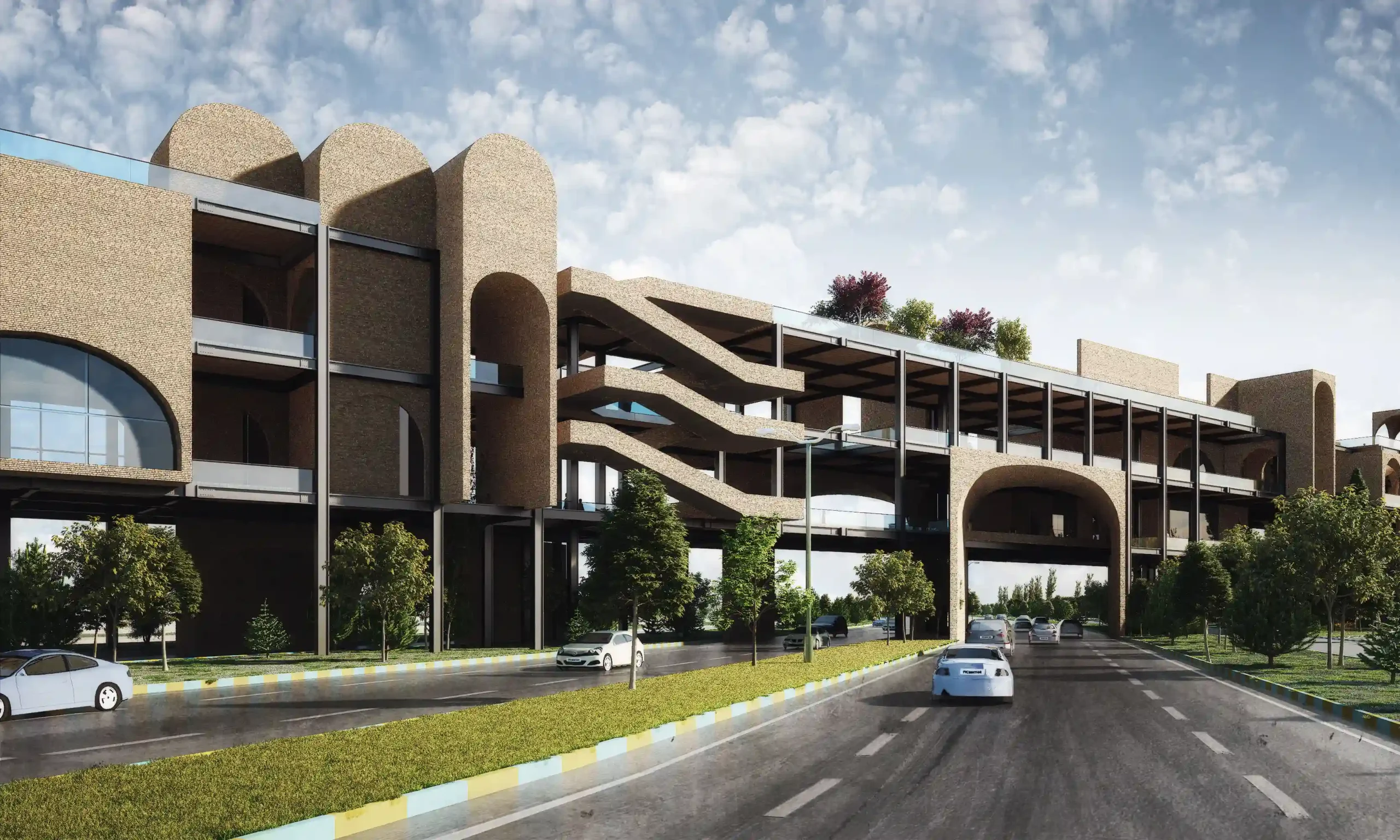
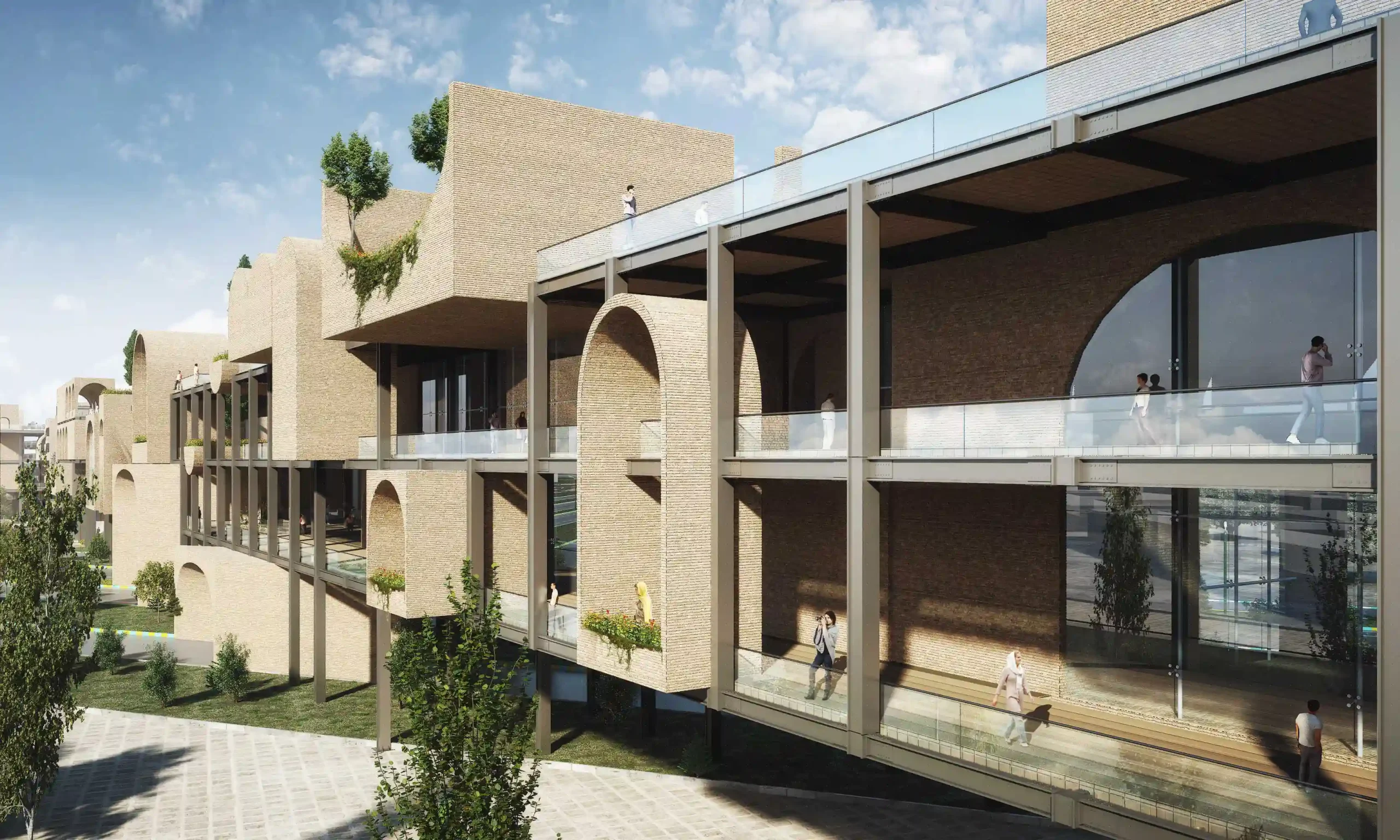
Urban Bridge is a proposal for designing a new bridge connecting two significant parts of Isfahan city. Isfahan being both the capital city of Iran and its growth into Zayandehrud, the largest river of the Iranian Plateau, multiple bridges were built in this area in the past, all of which served as socializing places and cultural hubs for Iranians and visitors alike. These bridges were originally designed to connect two or more cities or villages. Still, new uses have been integrated to create a proper context for social interactions in addition to creating a link between the Zayandeh River’s two sides. Due to the rising need for vehicle traffic in the recent years and the transformation of urban spaces, the spatial quality of bridges began to diminish. Their utility was reduced to nothing more than a means of connecting people, leading to a pattern in bridge appearance construction that lacked any historical identity.
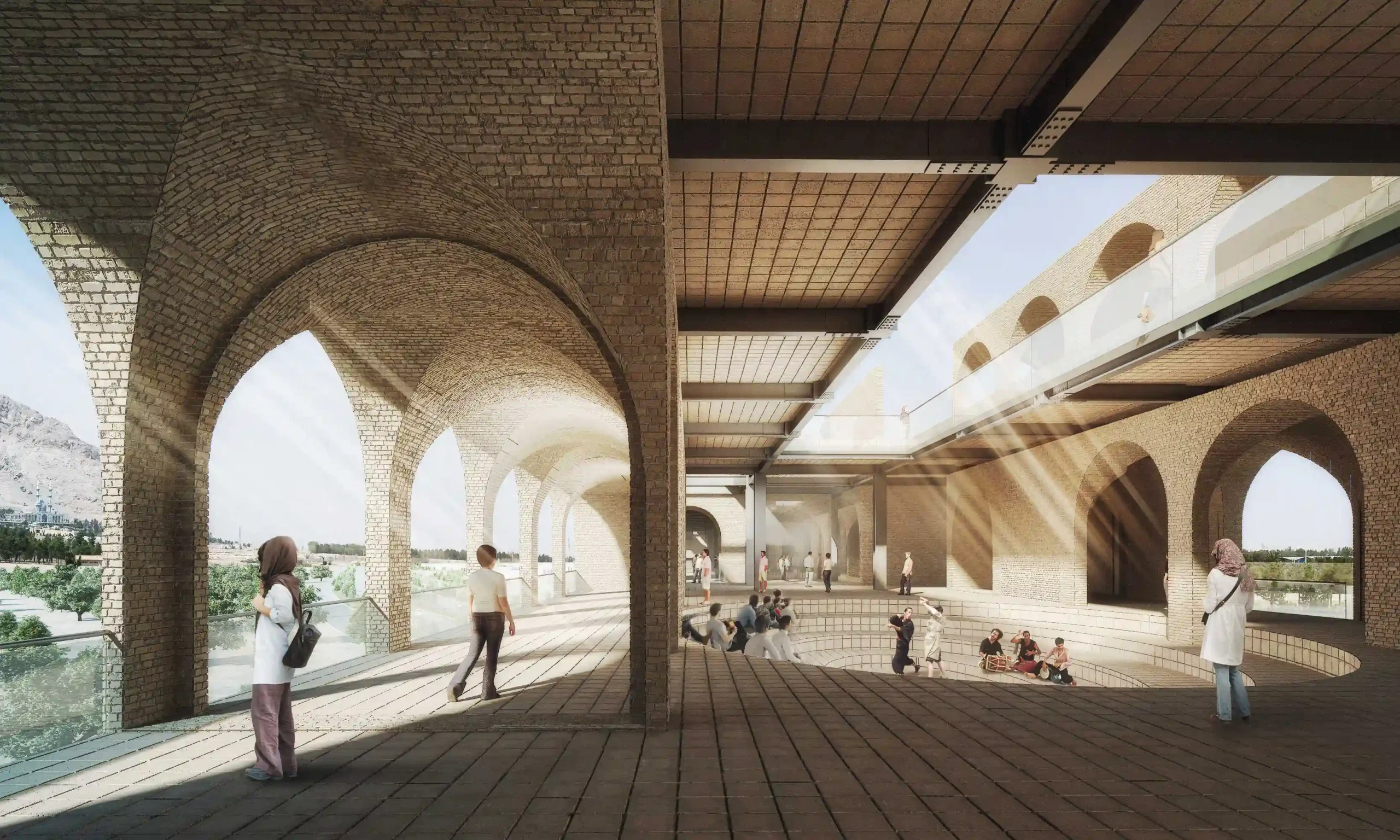
Ashari Architects proposed to use a metal lattice frame to create an abstract geometric pattern based on the geometry of historic bridges in the city of Isfahan. Through labyrinthine paths in both vertical and horizontal axis, the design provides various spatial experiences for visitors .The core components of the design were derived from the city’s historical setting to generate a sense of place and a mental image of its residents for the main structure. With each shift in position and rotation of the observer’s gaze, visitors are taken on a new journey through a labyrinth of space and events, all drawn from the heart of historical texture. The goal was to provide a place where people of all ages could come together to strengthen social ties and emphasize the city’s identity markers.
The conical shape of the cooling tower, a primary product of the factory, was chosen as the foundational form. This conical design plays a crucial role in unifying the identity both inside and outside. Its slope resonates with adjacent buildings and the surrounding context.
By repetitively adjusting the conical volumes—shifting them forwards, backwards, and in various directions—natural light penetrates from multiple angles, offering enhanced views and crafting a dynamic skyline. On the lower floors, these conical modules are interconnected, ensuring smoother access between them.
Based on the required space, the conical shape, featuring a longitudinal slope, was designed as multi-story. This led to a significant height discrepancy, particularly at the cone’s apex, when compared to the surrounding project area. To mitigate this, sections of the structure, including parking, facilities, and services, were relocated to the basement. To ensure natural light for these spaces and delineate a well-defined open space for the office, sunken gardens were incorporated around the structure to generate various spatial quality . Additionally, vegetation was strategically placed to separate the office space from nearby buildings.
In this project, a paramount consideration was the design of office spaces tailored to employee comfort and satisfaction, cultivating a sense of belonging.
This approach not only enhances individual productivity but also bolsters the factory’s overall output. Recognizing that employees dedicate significant hours within these spaces, and acknowledging the profound influence of the physical environment on performance, it’s vital to address elements that enhance overall well-being and satisfaction.
The design accommodates diverse functional needs. It delineates zones specifically for concentration, collaboration, interaction, and learning. Given the crucial nature of boundaries between these zones, our design strategy integrates a mix of open, closed, and transitional spaces. Each area’s configuration and dimensions were crafted based on its intended function. Emphasis was also placed on ergonomic considerations, safety, health, and thermal comfort, with solutions integrated to cater to each aspect.