
Samian Dormitory office Building
Location: Shiraz University, Shiraz, Iran
Client: Nasuti fard Foundation (Mehdi Nasuti fard, Reza Moghadasi fard)
Architects: AmirHossein Ashari, Zahra Jafari
Phase II Designers: Zahra Jafari, Mahsa Parhizgar, Mohammad Mohajeri
Supervision: AshariArchitects (Mahsa Parhizgar)
Graphic: Sara Nazemi
Coordinator: Shiva Nazarboland, Asma Sirjani asl
Research: Parisa Afzali
Structure and Installations: Talayedaran Sanat Engineers Company
Project Manager: HamidReza Valizade
Construction Supervisor: Reza Shekohian
Construction: Mohammad Zaalpour
Photographer: Navid Atrvash
Date: 2024
Area: 250 m2
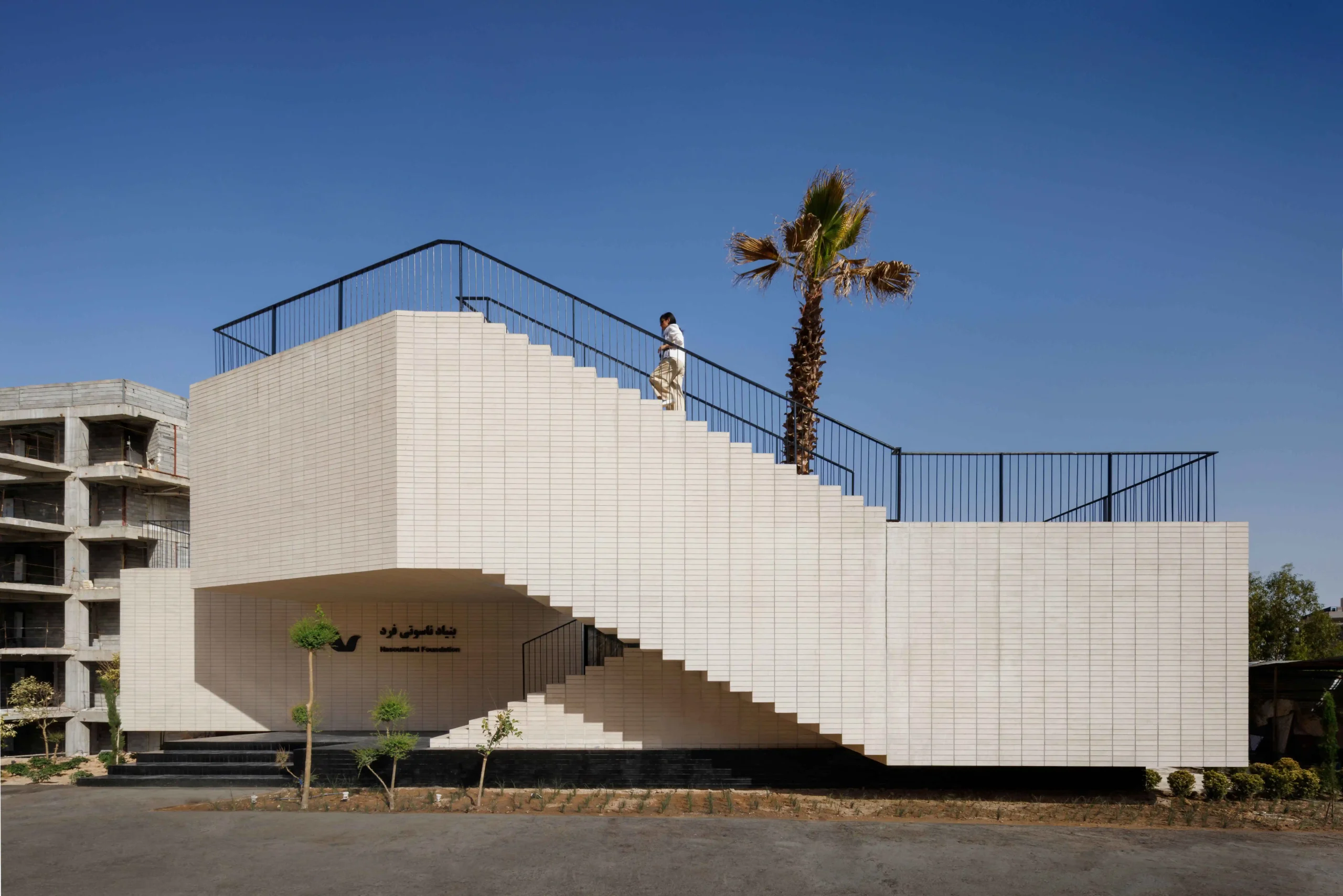
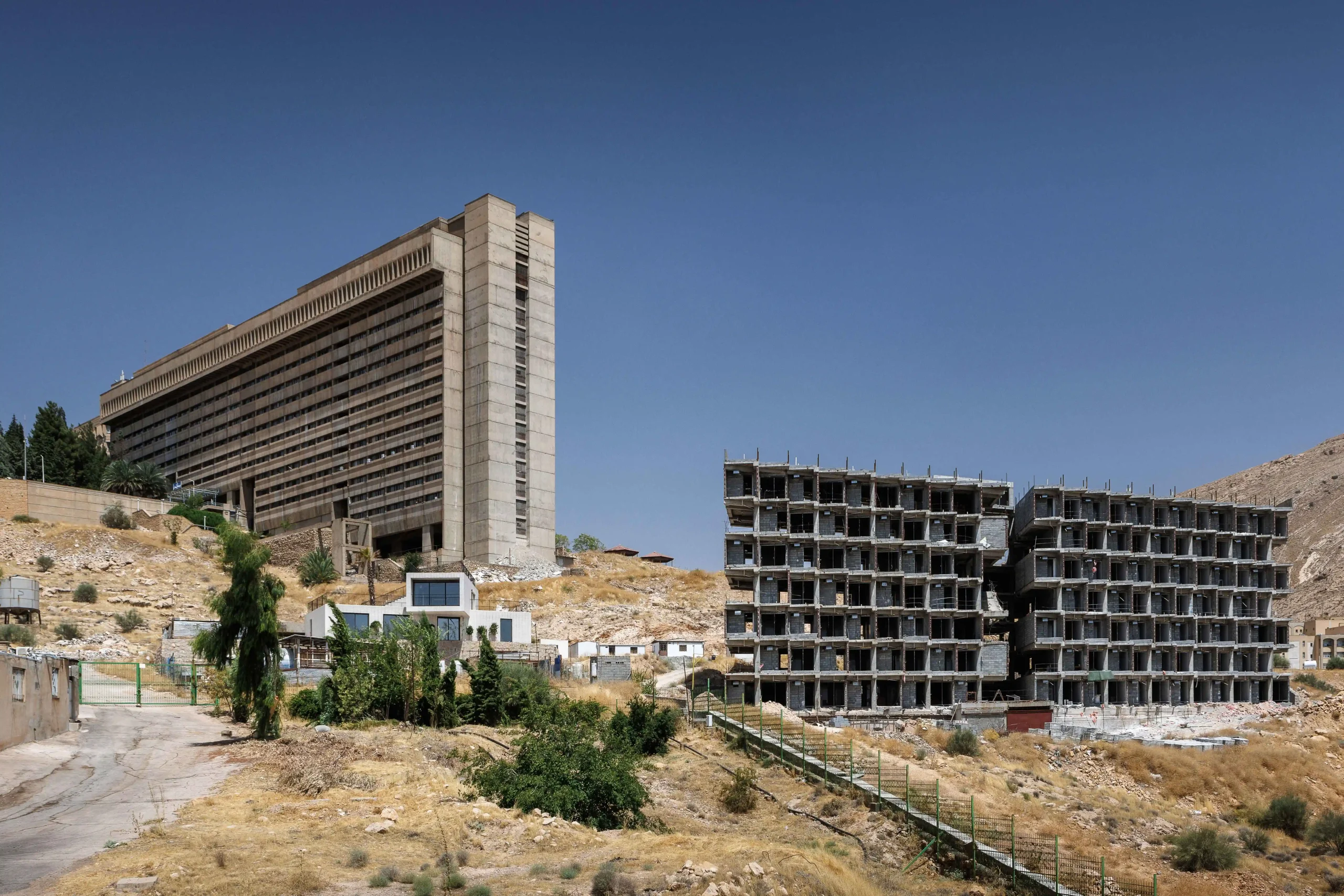
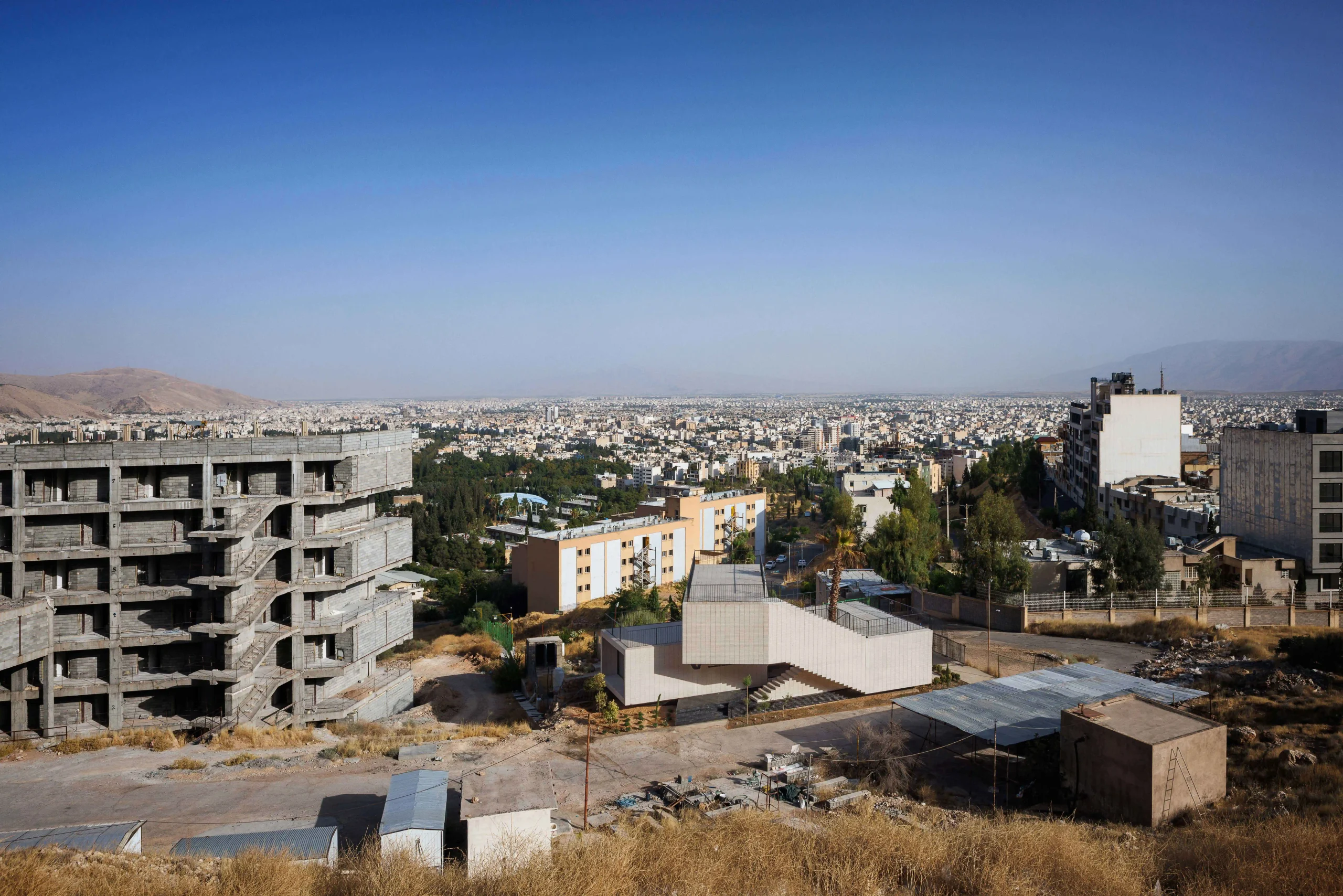
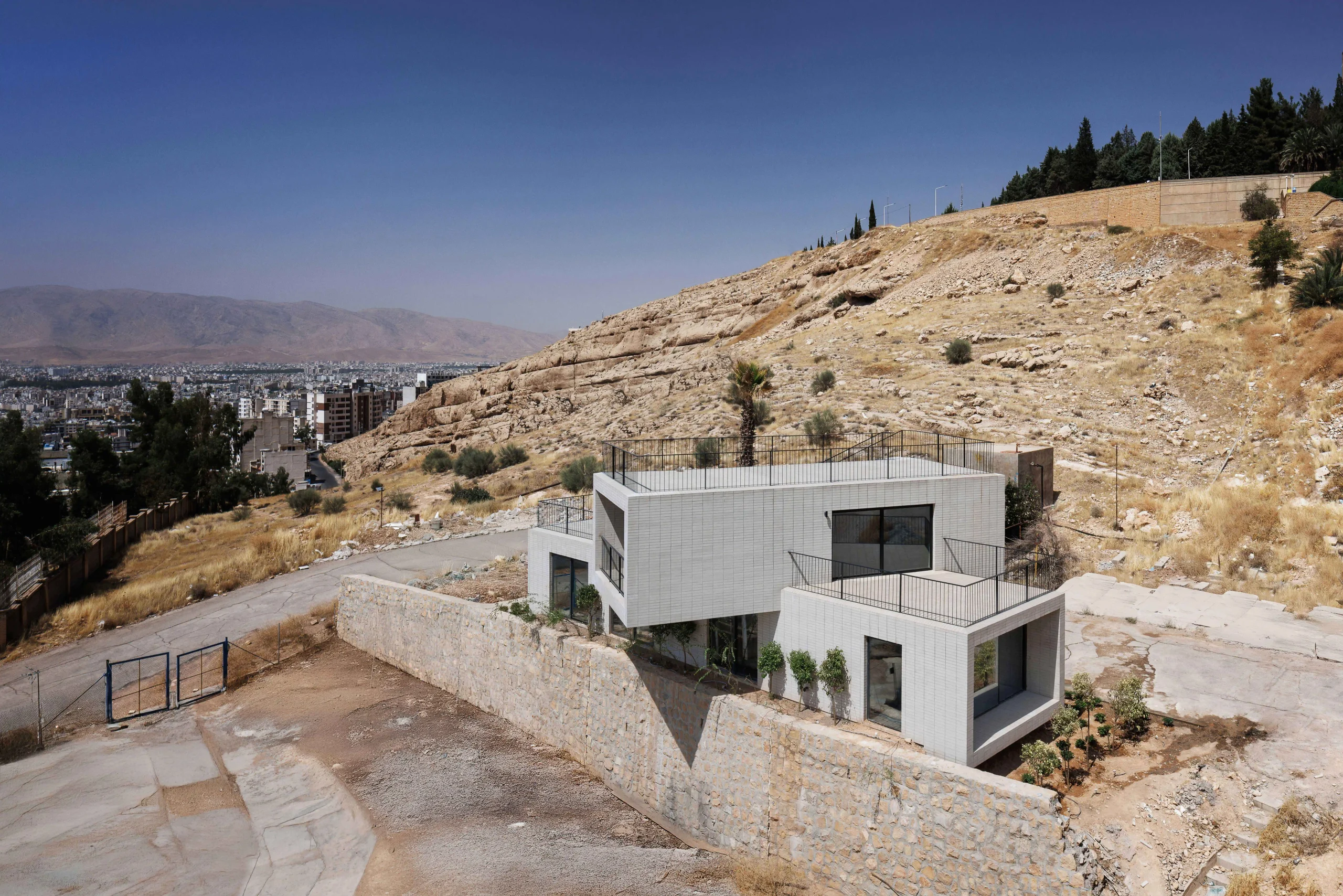
Location The Administration Building of Samian Dormitory is situated on the elevated grounds of Shiraz University, alongside student residences, with expansive views toward the city and the surrounding mountains.
Issue
Administrative buildings typically turn into silent, unused shells after working hours. Within a university context, this becomes a critical concern, as campus life reaches its peak precisely when much of the architectural body remains inactive. A university is not merely an educational institution; it is a sphere for collective life, cultural exchange, and the formation of social experiences. Architecture, therefore, cannot be reduced to administrative function alone; it must provide a framework that sustains the flow of life throughout the day and into the night.
Necessity
Today’s university demands flexible and multiple-use spaces—environments that move away from single-functionality and allow for diverse scenarios to unfold. Within this framework, Dynamic Programming emerges as a contemporary necessity, shaping spaces that adapt to evolving academic and social rhythms.
Strategy
Our proposal is based on Re-programming: transforming the building from a static object into an Event-Platform. During the day, it fulfills managerial and administrative functions; after working hours, its terraces, platforms, and roof evolve into a student stage—spaces for study, dialogue, gatherings, film screenings, or collective silence. The roof is not simply a physical surface, but a platform for Collective Performance. As in-between spaces, the terraces and roof become thresholds between inside and outside, formal and informal, individual and collective. They host informal interactions and shared student experiences, supporting fluidity, creativity, and social engagement.
Future Vision
Such an architectural approach may transcend static conditions and become a Dynamic Event within university life—a design that activates not only administration, but also the collective vitality of students.
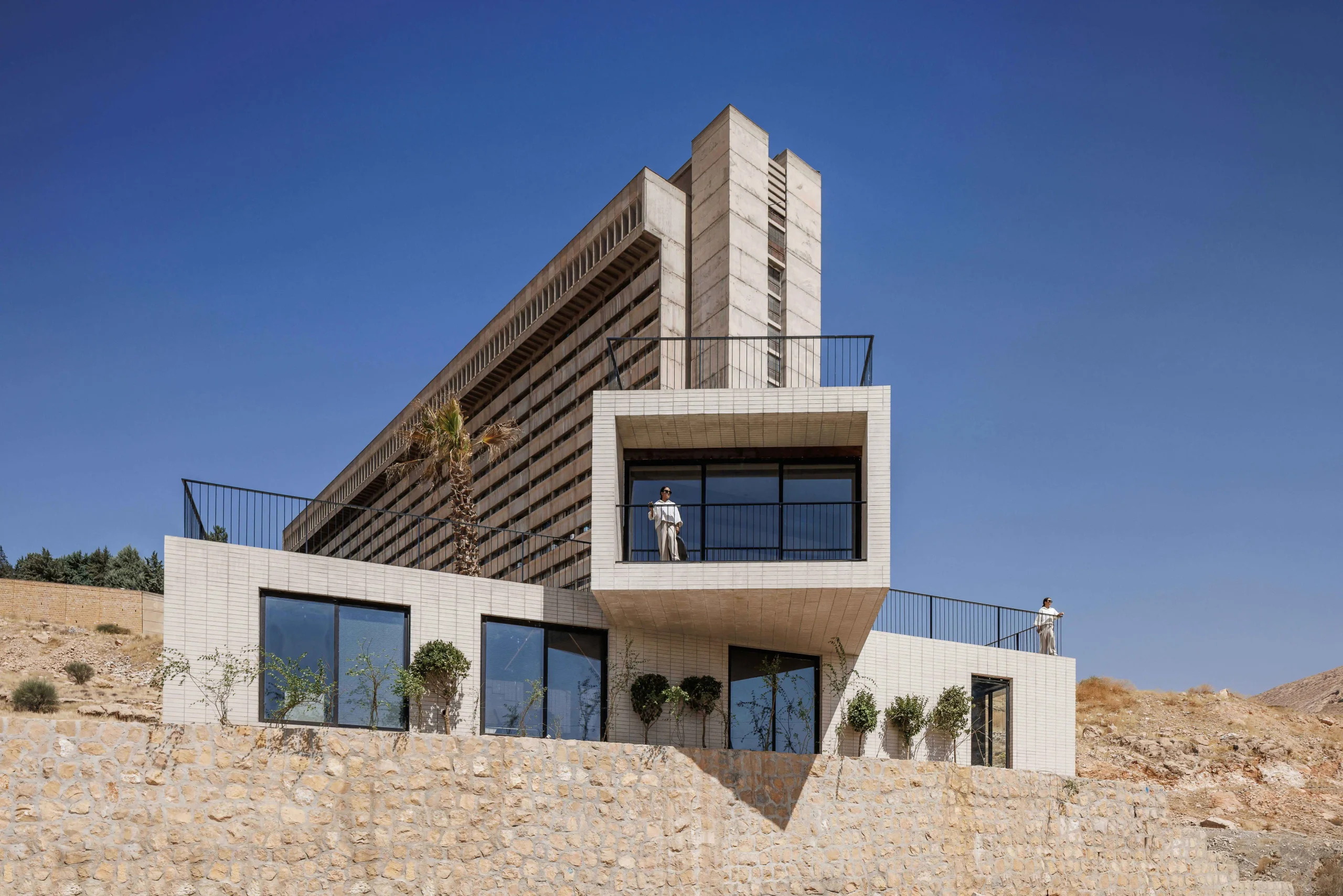
The conical shape of the cooling tower, a primary product of the factory, was chosen as the foundational form. This conical design plays a crucial role in unifying the identity both inside and outside. Its slope resonates with adjacent buildings and the surrounding context.
By repetitively adjusting the conical volumes—shifting them forwards, backwards, and in various directions—natural light penetrates from multiple angles, offering enhanced views and crafting a dynamic skyline. On the lower floors, these conical modules are interconnected, ensuring smoother access between them.
Based on the required space, the conical shape, featuring a longitudinal slope, was designed as multi-story. This led to a significant height discrepancy, particularly at the cone’s apex, when compared to the surrounding project area. To mitigate this, sections of the structure, including parking, facilities, and services, were relocated to the basement. To ensure natural light for these spaces and delineate a well-defined open space for the office, sunken gardens were incorporated around the structure to generate various spatial quality . Additionally, vegetation was strategically placed to separate the office space from nearby buildings.
In this project, a paramount consideration was the design of office spaces tailored to employee comfort and satisfaction, cultivating a sense of belonging.
This approach not only enhances individual productivity but also bolsters the factory’s overall output. Recognizing that employees dedicate significant hours within these spaces, and acknowledging the profound influence of the physical environment on performance, it’s vital to address elements that enhance overall well-being and satisfaction.
The design accommodates diverse functional needs. It delineates zones specifically for concentration, collaboration, interaction, and learning. Given the crucial nature of boundaries between these zones, our design strategy integrates a mix of open, closed, and transitional spaces. Each area’s configuration and dimensions were crafted based on its intended function. Emphasis was also placed on ergonomic considerations, safety, health, and thermal comfort, with solutions integrated to cater to each aspect.