
Rost Platform
Location: Malek abad Blvd, Mashhad, Iran
Architects: AmirHossein Ashari, Zahra Jafari
Design Team: Mahsa Parhizgar, Afshin Ashari, Sahar Gharaie
Client: Rost (Habib Ghorbani, Mohammad Ghorbani)
Execution: Rost Team ( Hamed Roghani yazdi, Hamid Foroughi pour, Parviz Tariverdi)
Supervision: AmirHossein Ashari
Graphic: Sara Nazemi
Coordinator: Shiva Nazarboland, Asma Sirjani
Research & Ideator: Hakime elahi
Photographer: Arash Akhtaran, Navid Irani
Video Creator: Nazanin Alizade
Date: 2024
The Face of Cities Today
In many valuable urban areas, residential spaces are being converted into commercial ones without consideration for urban planning principles and infrastructure. This trend results in visual chaos, weakening urban identity and the sense of place. Consequently, it diminishes the sense of belonging and social connection while increasing urban insecurity.
Analysis and Review Before Renovation
The site was previously a furniture store. On the façade facing Malek Abad Boulevard in Mashhad, a large wardrobe had been installed—an element reminiscent of Robert Venturi and Denise Scott Brown’s Decorated Shed theory. This concept emphasizes that a building’s identity is not shaped through its form and architecture but rather through added decorations or graphic signage on the façade.
In contrast, the façade facing Bozorgmehr Street was the product of uncontrolled commercial expansion, characterized by extensive glass surfaces overloaded with visual information.
Both of these approaches are common in commercial architecture but contribute to urban disorder and visual clutter. Addressing this issue became a key design concern.
Concern 1: Urban Issues
A fundamental question emerged during the renovation process:
How can the redesign establish a unique identity for the project while preventing further visual chaos in the city?
Challenging the Common Pattern
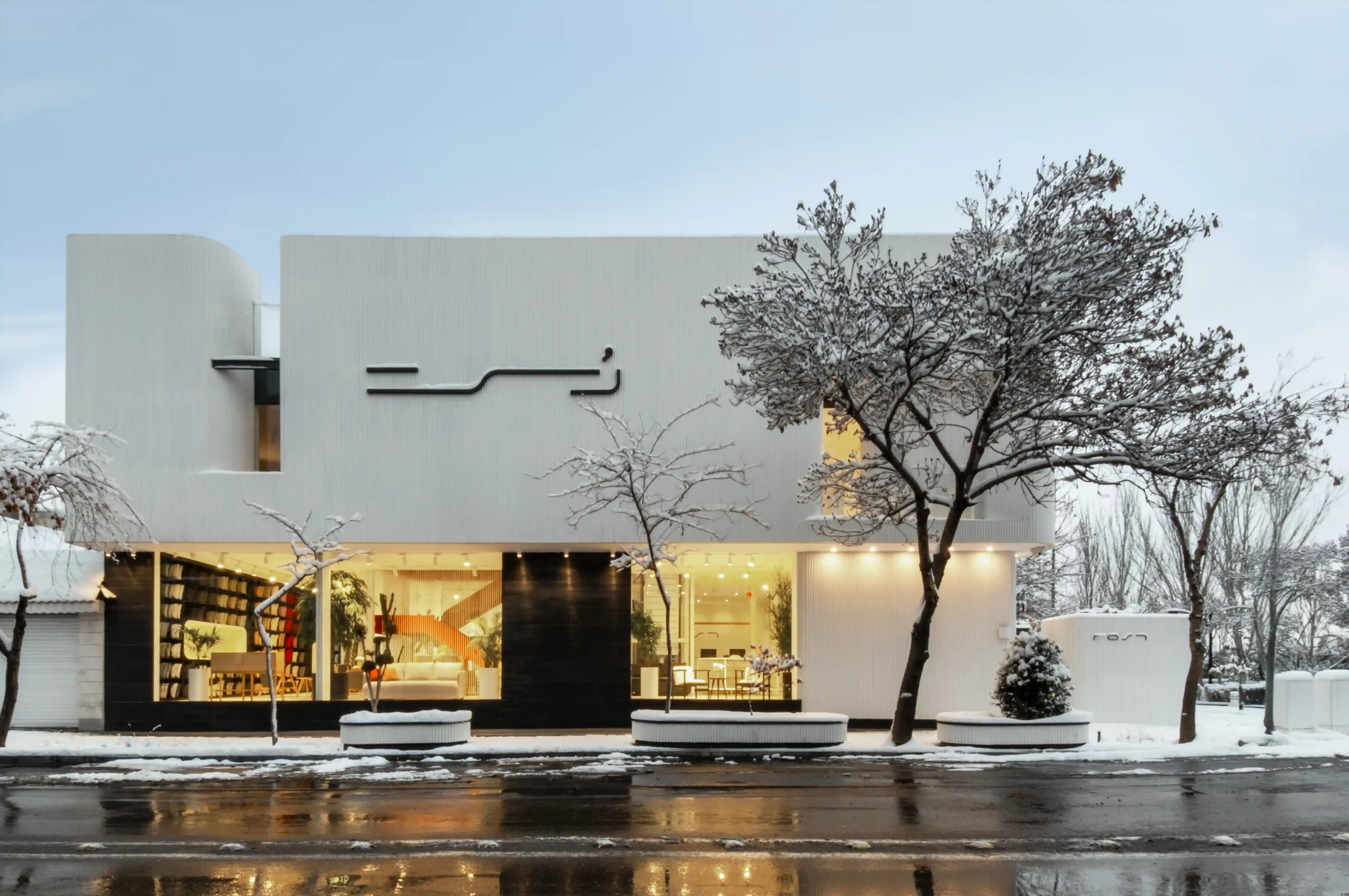
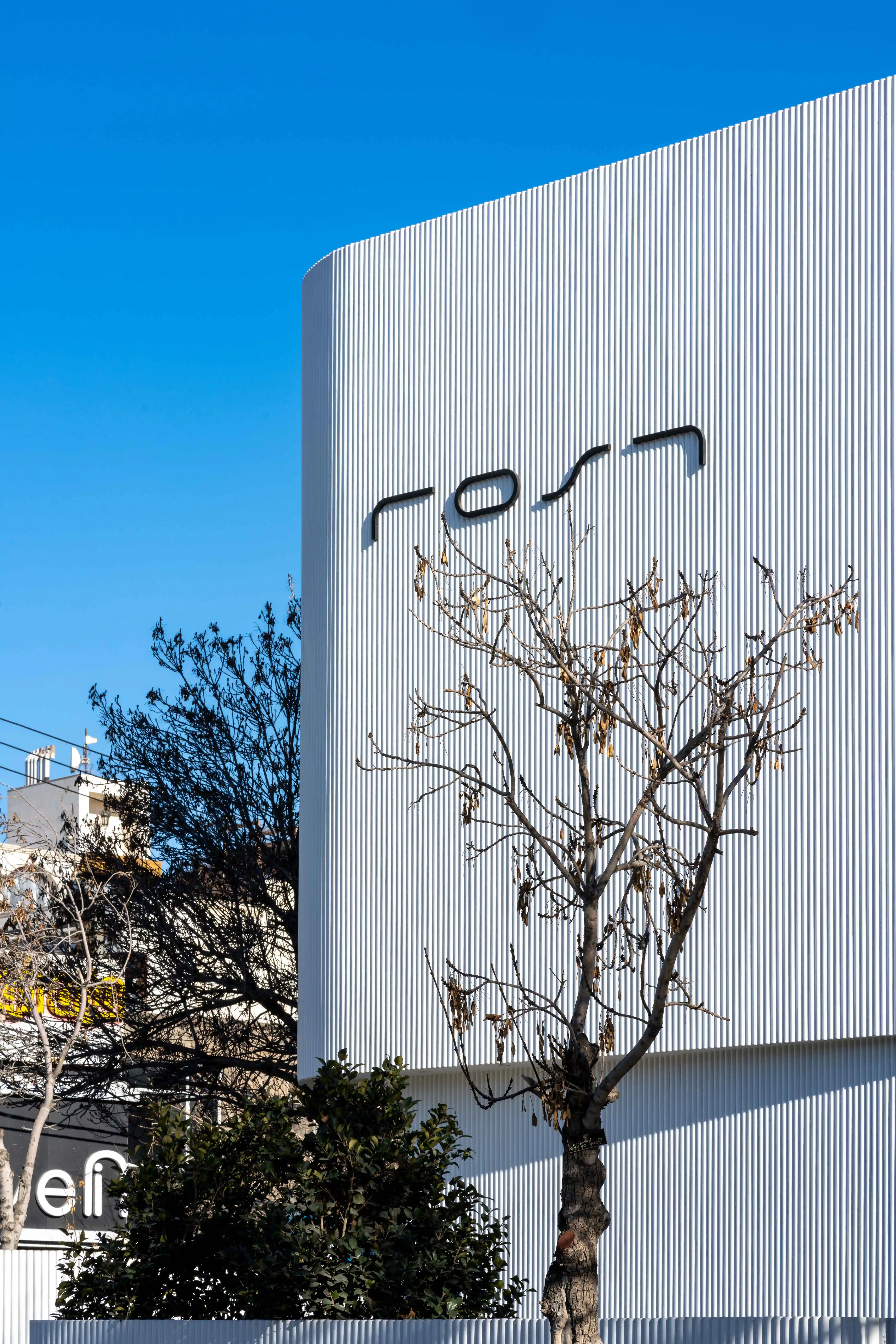
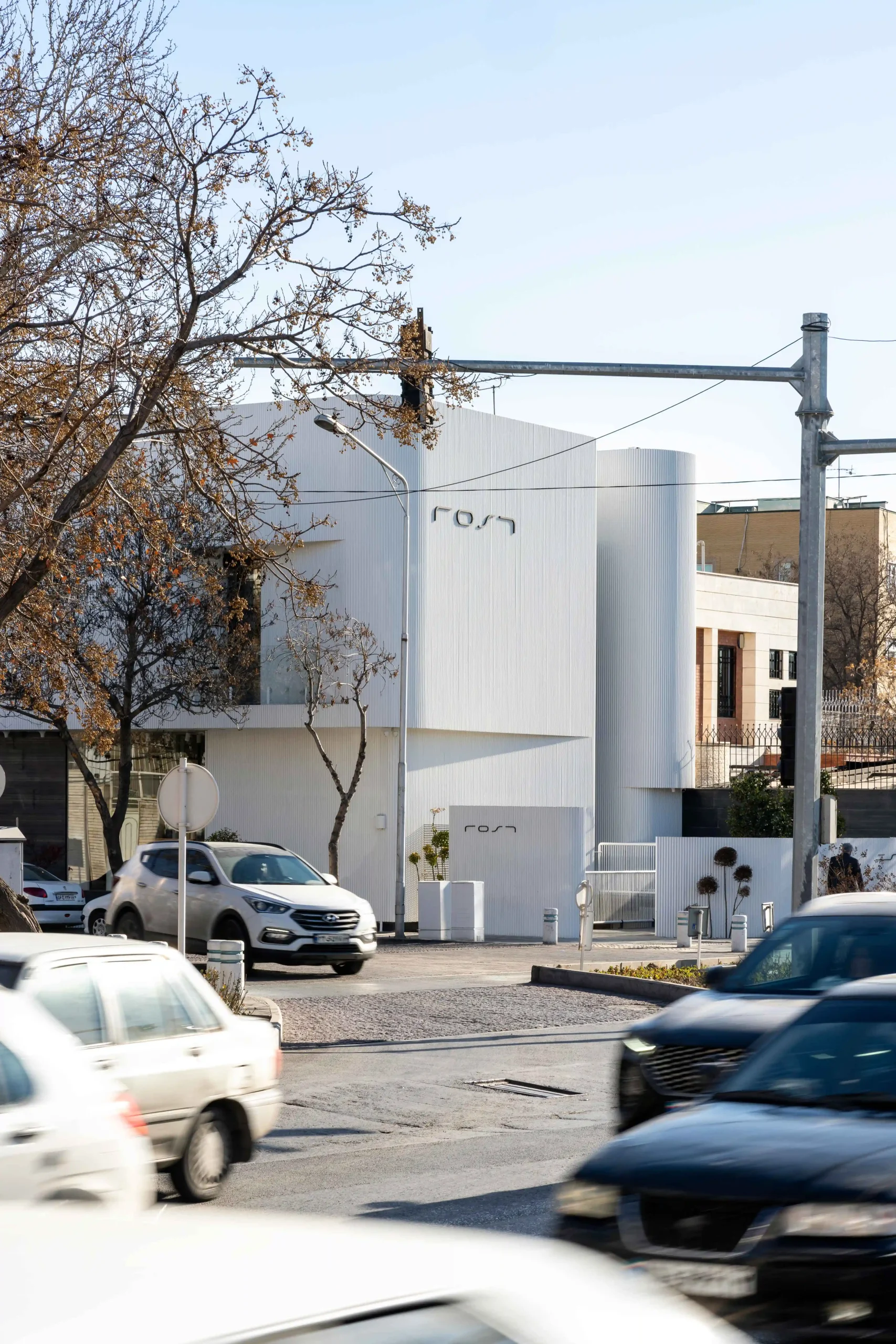
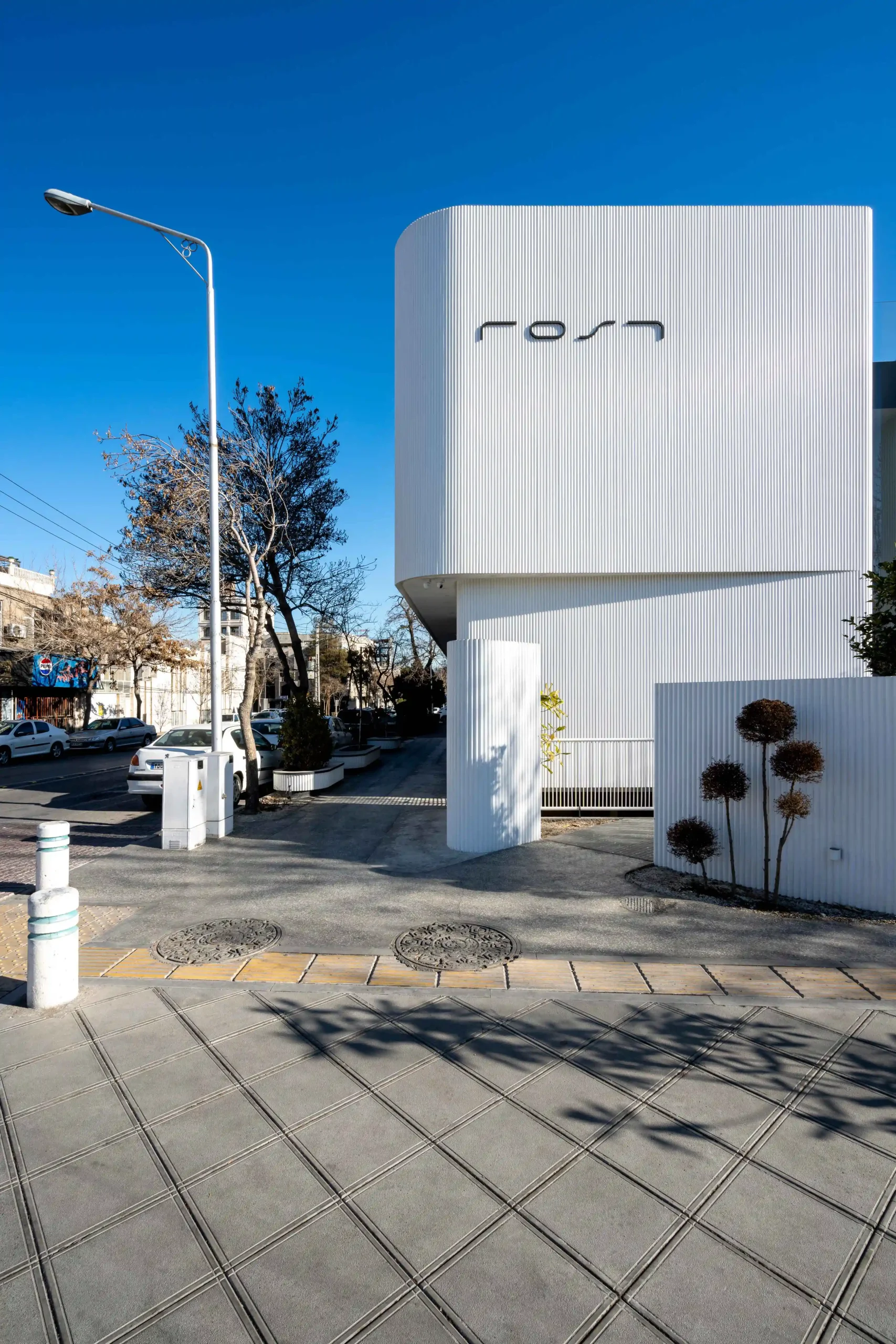
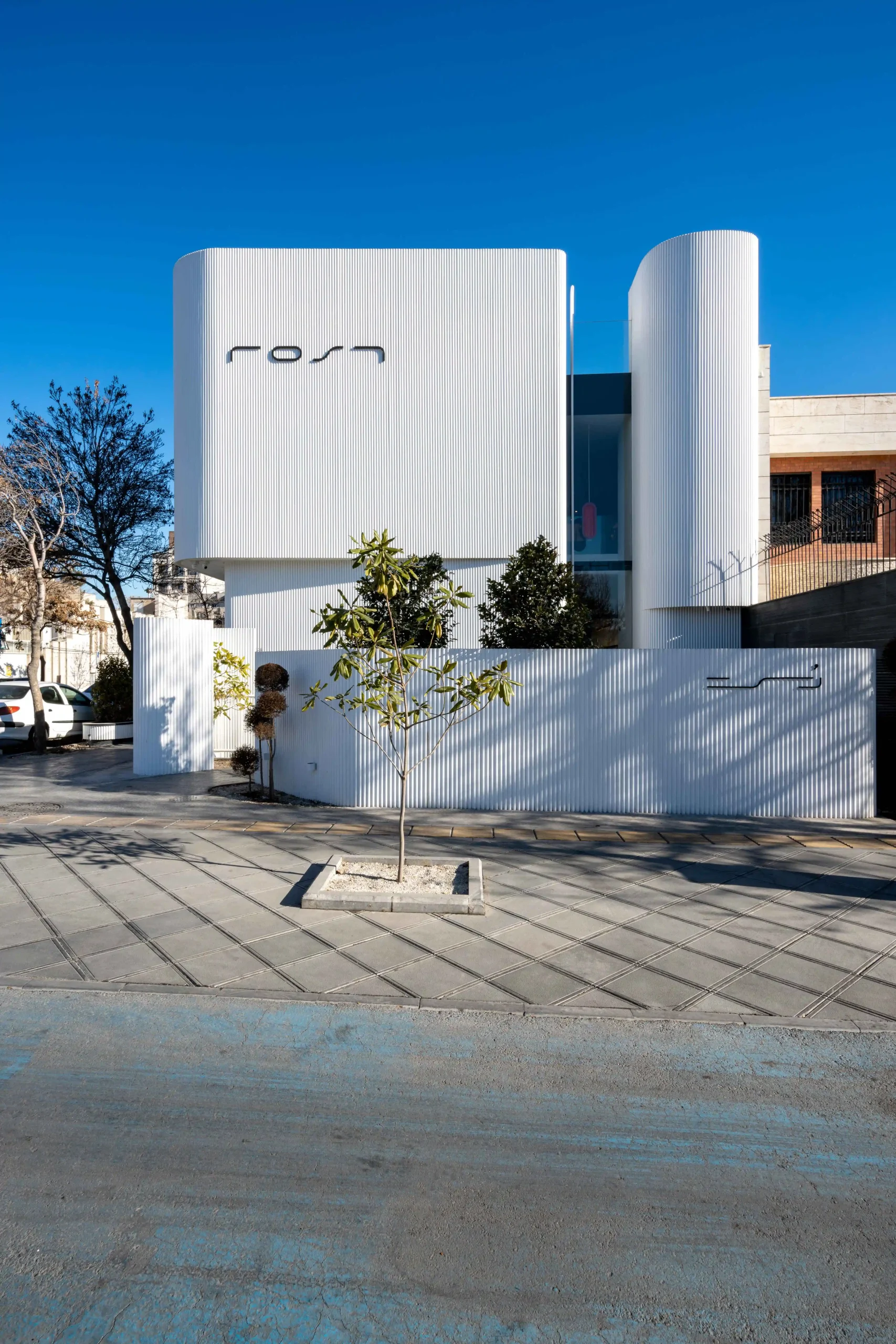
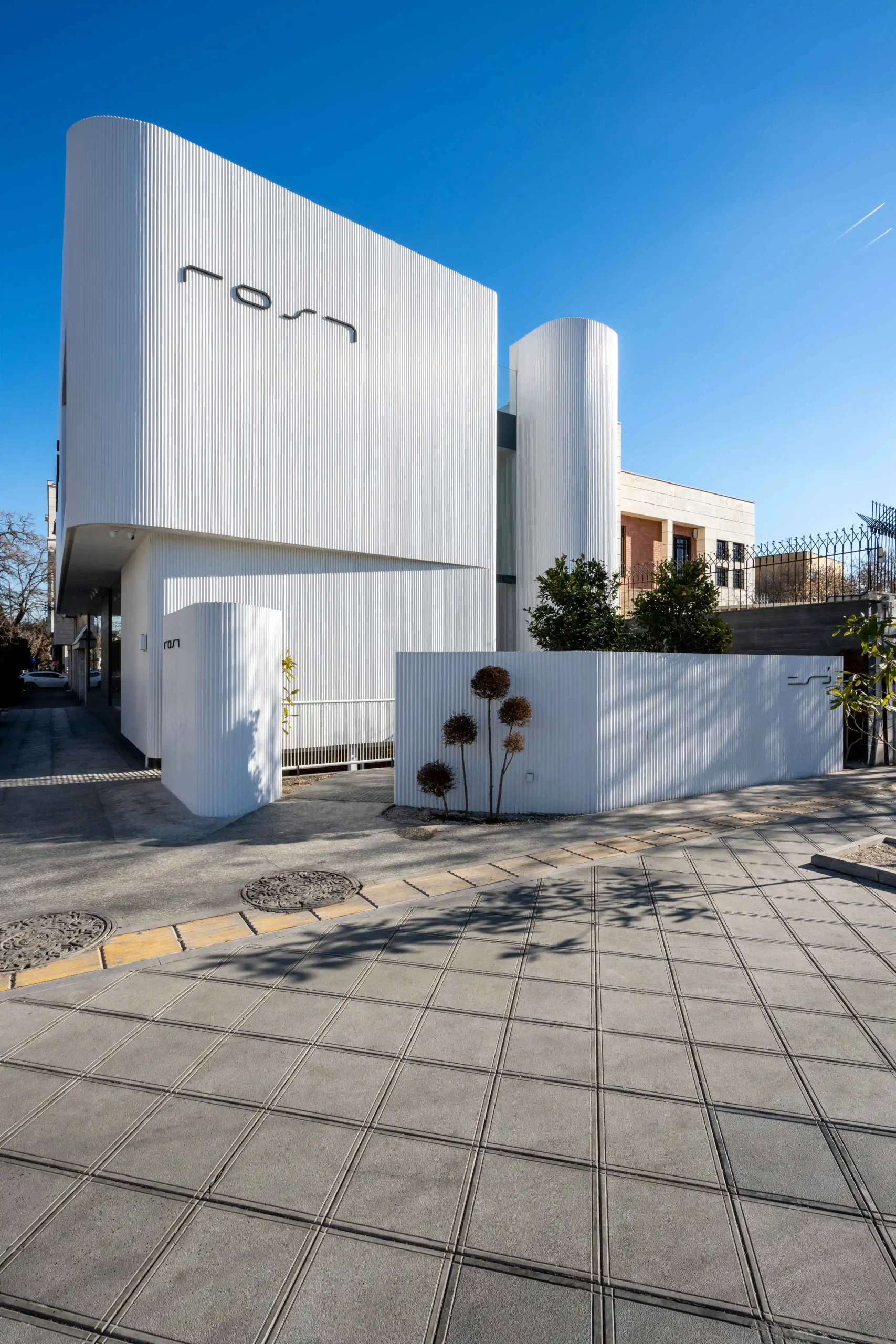
The exhibition’s exterior was designed with a critical approach—formed as a simple, white, and cohesive volume with minimal transparency and reduced storefront dimensions. Despite its simplicity, the façade panels gently curve inward at the corners, seamlessly integrating with the interior walls surrounding the product display area. This cohesive approach fosters an identity that originates from within the space and extends into the public realm.
Curiosity and Spatial Discovery
The new layout positions the entrance at the corner. By breaking the pathway and establishing a spatial hierarchy, the transition into the exhibition becomes gradual, guiding visitors from the bustling urban environment into a more contemplative interior. This design invites curiosity, encouraging exploration.
The pathway includes a suspended bridge leading to the ground floor and stairs descending into a sunken courtyard. Beyond creating fluidity in movement and sightlines, this approach brings natural light into the lower levels.
On the façade, carefully designed openings frame views of Malek Abad Garden while allowing controlled slices of natural light to filter into the space. These openings also act as subtle invitations for passersby, sparking interest in discovering the interior.
Transforming the Showroom into a Platform
Traditionally, showrooms serve as spaces for product display and direct customer interaction. However, by redefining this concept beyond a singular function—enabling cultural and social engagement—the project fosters greater social dynamism in the surrounding urban context.
Concern 2: Program & Functionality
Another key question arose:
Can private showrooms and furniture exhibitions also serve as platforms for cultural and social events?
Flexibility and Multi-functionality
In response, the design embraces flexibility, allowing the space to adapt to various functions and scenarios over time, including cultural and social gatherings. Achieving this required an open, uninterrupted spatial organization with minimal barriers.
However, the original structure—characterized by a compact layout and low ceilings—resulted in fragmented spaces that resisted adaptability. To address this, structural reinforcements were implemented, and select walls and ceiling sections were removed to create a more open, versatile environment. Where zoning was necessary, suspended polycarbonate panels were introduced. These semi-transparent elements define boundaries while maintaining spatial continuity, offering abstract glimpses of adjacent activities and evoking curiosity and playfulness.
Efforts & Impact
ROST Platform distinguishes itself from surrounding commercial buildings through its simplicity and elimination of excess, prompting thoughtful engagement from its audience. This approach not only reinforces the project’s social role within the city but also extends beyond a conventional showroom. By providing a venue for cultural events, it redefines itself as a platform—a dynamic and evolving space that transcends its commercial function.