
Seen & Unseen pavilion
Location: HonarShahre Aftab cultural center, Shiraz, Iran
Architect: AmirHossein Ashari
Design Partners: Zahra Jafari, Mahsa Parhizgar
Client & Sponser: Rasta group
Function: Pavilion
Construction: Ali Mokhtari, Mahsa Parhizgar, Zahra Jafari, Shahrzad Roozegar, Mehrnaz Asadi, Amin Mosavi, Barad Hasani, Gholamali Hamidi,
Research & Ideator: Hakime Elahi
Graphic : Sara Nazemi
Coordinator: Shiva Nazarboland, Asma Sirjani asl
Date: 2024
Photography: Navid Atrvash
Thanks to: Pouria bagheri
Doubt and Decision
A manufacturer from the south of Iran approached our team to design trade show pavilions for a building exhibition. Despite the constraints of a limited budget, compact dimensions, and the project’s temporary nature, we viewed this challenge as an opportunity to propose an innovative architectural approach.
Challenging Typologies
We questioned whether a temporary commercial pavilion could transcend its usual promotional role and become a meaningful architectural endeavor. By critiquing the repetitive design of conventional trade booths—focused solely on product display—we sought to redefine their functionality and craft a fresh architectural narrative.
Audience Engagement
Our solution was to transform the typical booth into an interactive pavilion, challenging traditional trade show dynamics. Through curiosity and experimentation, “Seen and Unseen” encouraged active participation rather than passive observation.
Spatial Composition and Perception
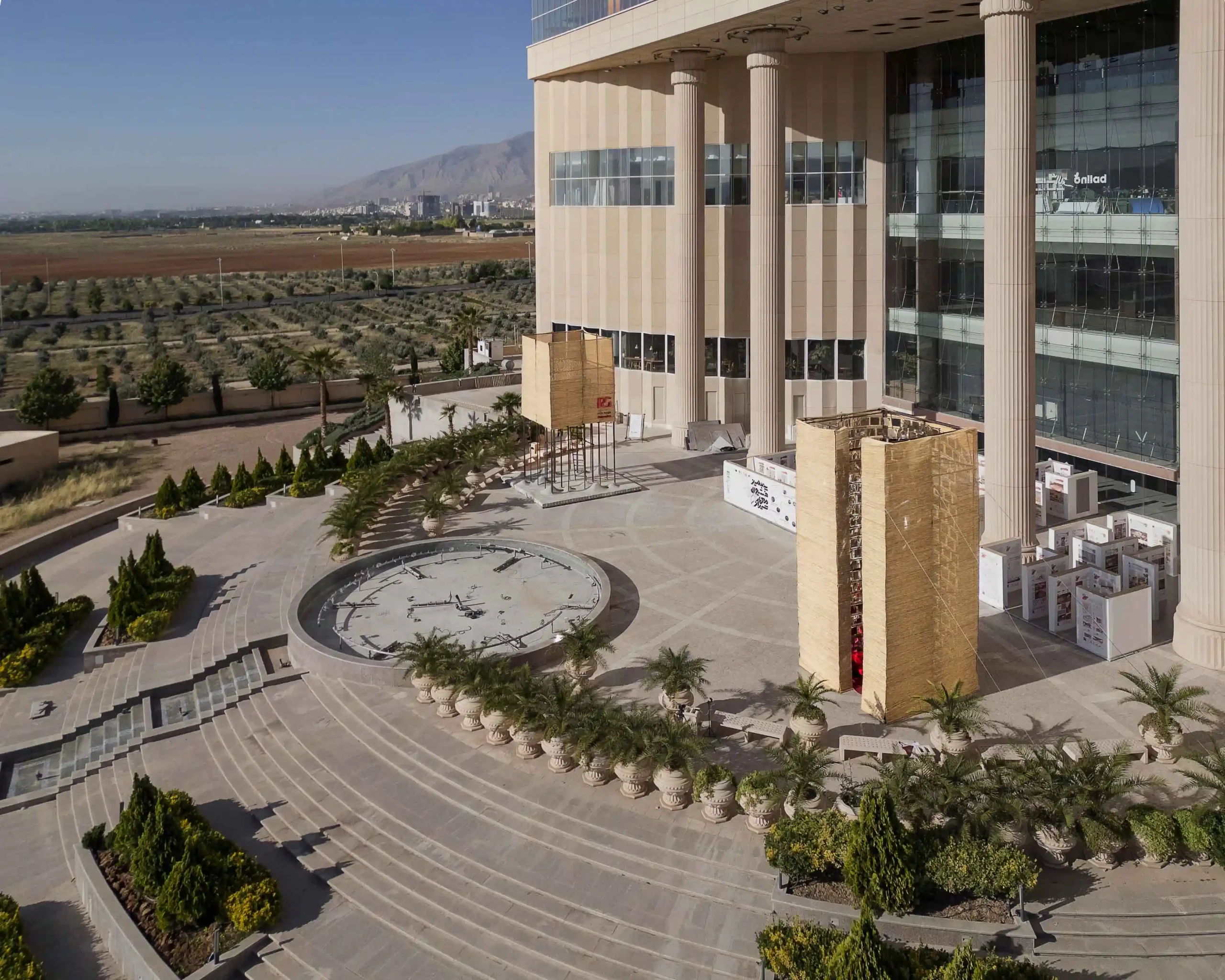
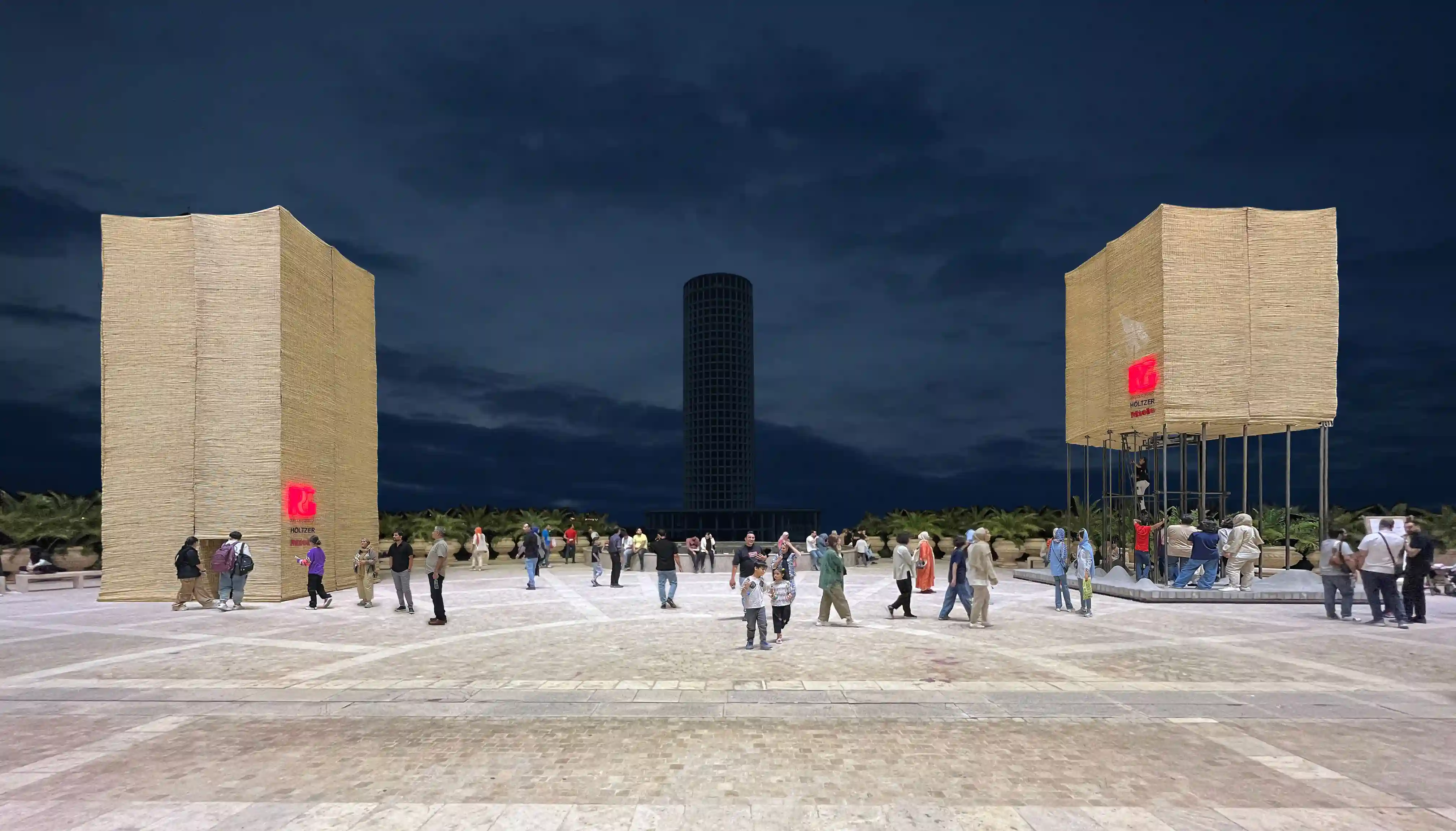
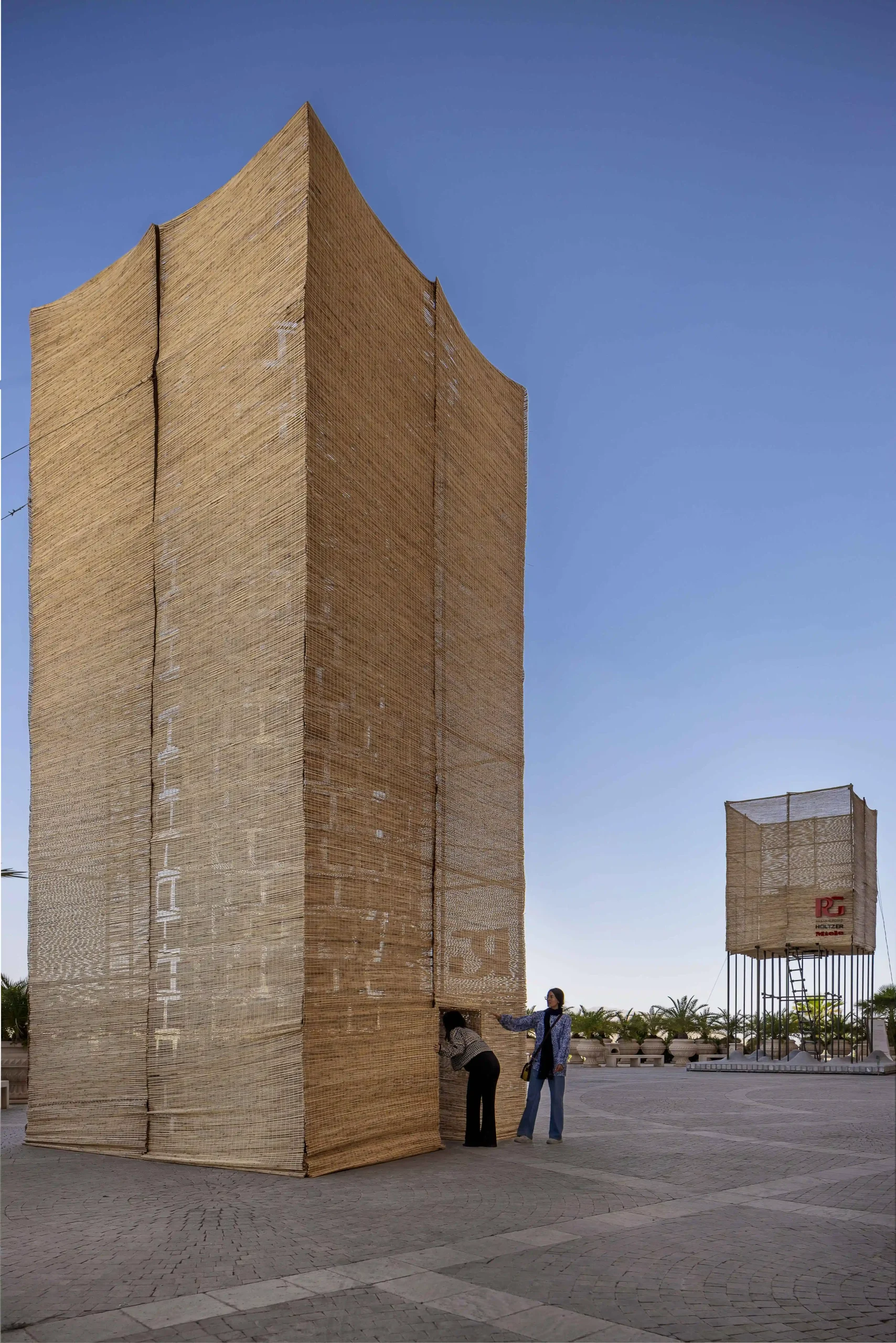
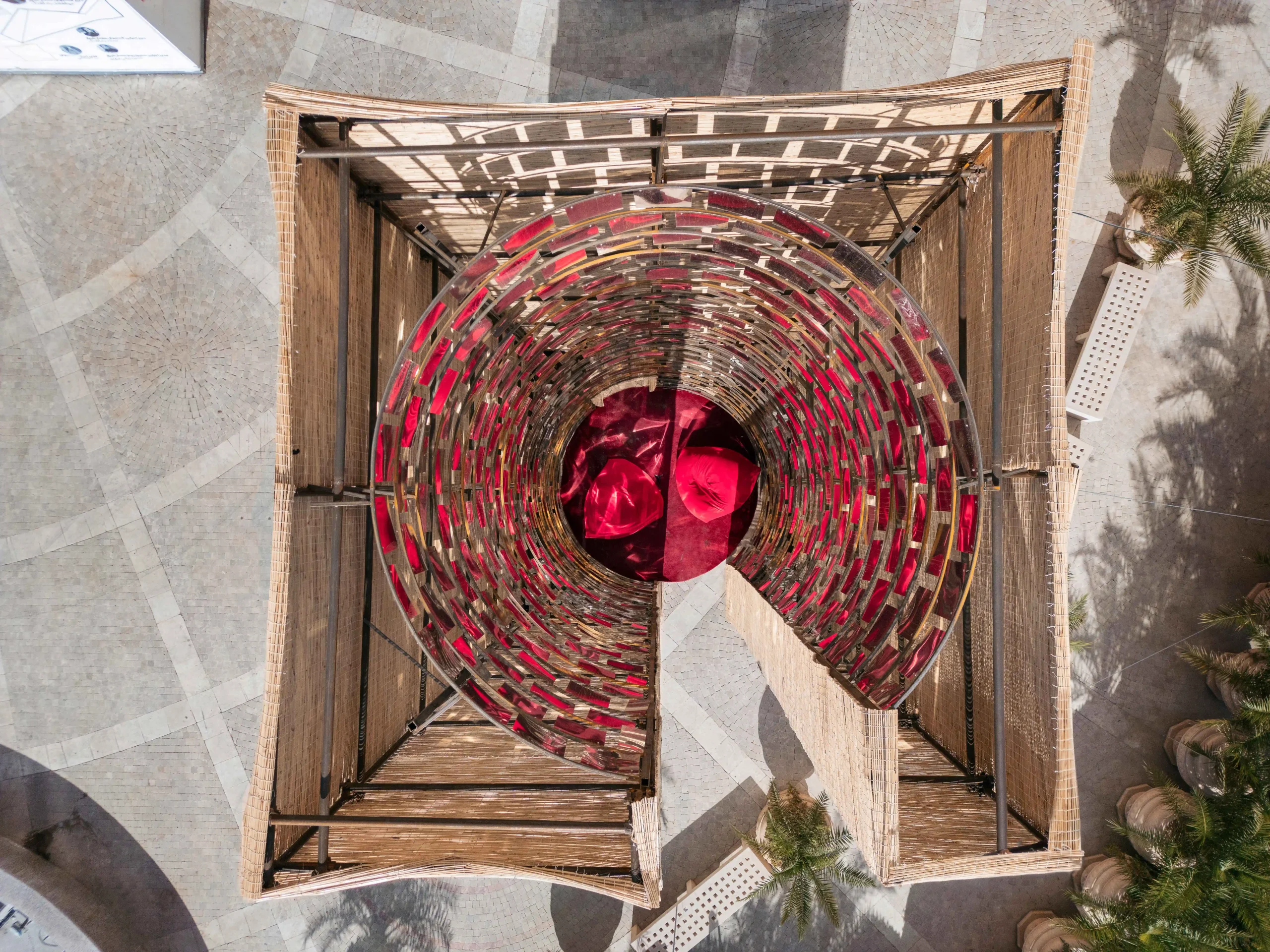
The pavilion consisted of two tall, enclosed cubes, each uniquely connected to the ground. This delayed immediate spatial comprehension, turning the act of exploration into a gradual, engaging discovery process.
Unconventional Entrances and Interiors
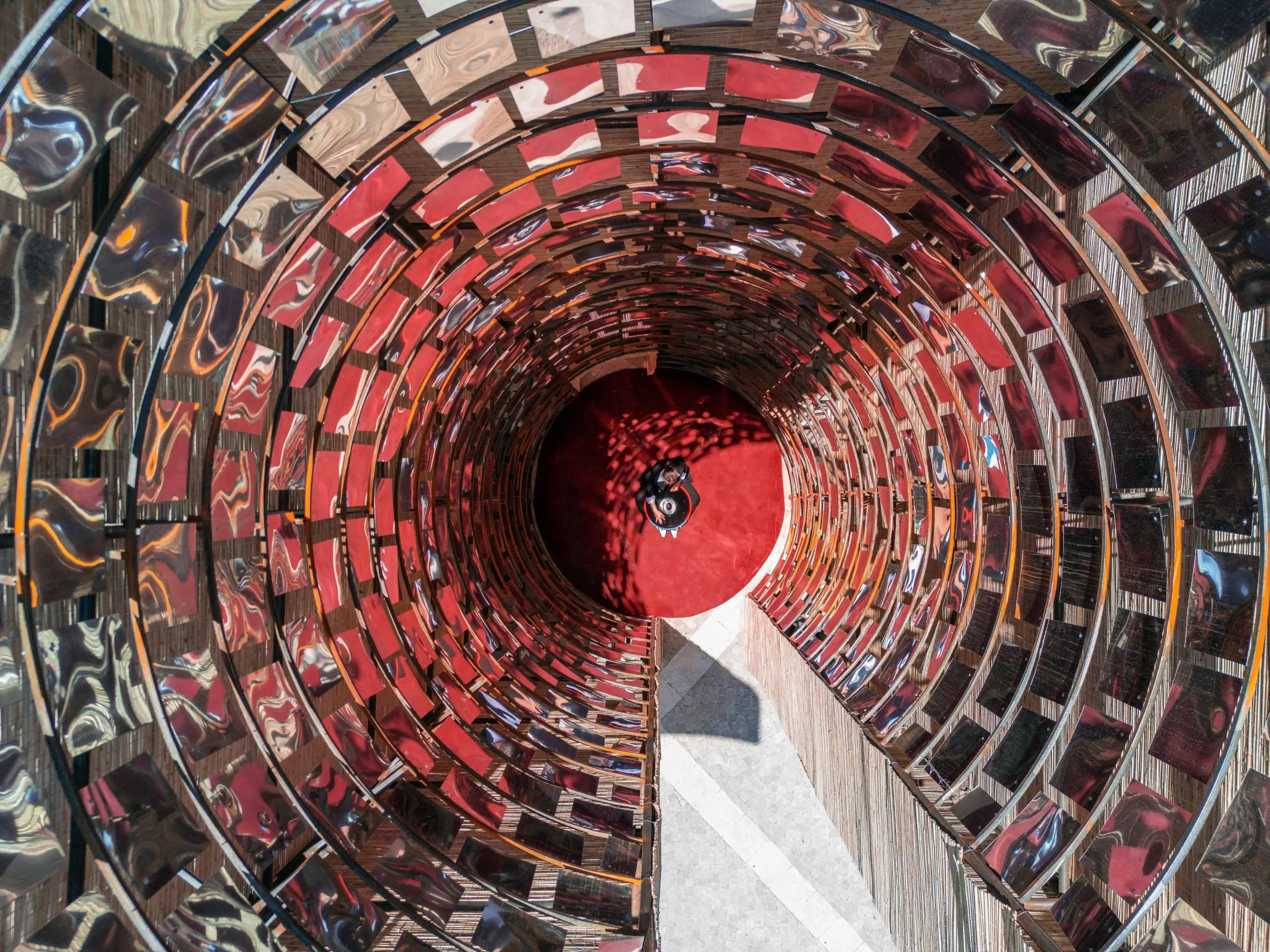
Non-traditional entrances set the stage for unexpected experiences. One entrance required bending to pass through, while another involved climbing a ladder. Inside, irregular geometries and inventive material choices challenged visitors’ visual assumptions, fostering a dynamic spatial experience.
Material Innovation
We reinterpreted familiar materials for unconventional roles: Tegeer (a traditional shading material) became the façade; concrete test cubes, normally discarded, formed the foundation; scaffolding served as the structural frame; and mirrors defined the interior surfaces. These elements transcended their standard uses, both aesthetically and functionally.
Impact and Potential
This pavilion demonstrated that even temporary exhibitions can become platforms for interactive, forward-thinking architectural explorations—revealing fresh possibilities for ephemeral design.
The conical shape of the cooling tower, a primary product of the factory, was chosen as the foundational form. This conical design plays a crucial role in unifying the identity both inside and outside. Its slope resonates with adjacent buildings and the surrounding context.
By repetitively adjusting the conical volumes—shifting them forwards, backwards, and in various directions—natural light penetrates from multiple angles, offering enhanced views and crafting a dynamic skyline. On the lower floors, these conical modules are interconnected, ensuring smoother access between them.
Based on the required space, the conical shape, featuring a longitudinal slope, was designed as multi-story. This led to a significant height discrepancy, particularly at the cone’s apex, when compared to the surrounding project area. To mitigate this, sections of the structure, including parking, facilities, and services, were relocated to the basement. To ensure natural light for these spaces and delineate a well-defined open space for the office, sunken gardens were incorporated around the structure to generate various spatial quality . Additionally, vegetation was strategically placed to separate the office space from nearby buildings.
In this project, a paramount consideration was the design of office spaces tailored to employee comfort and satisfaction, cultivating a sense of belonging.
This approach not only enhances individual productivity but also bolsters the factory’s overall output. Recognizing that employees dedicate significant hours within these spaces, and acknowledging the profound influence of the physical environment on performance, it’s vital to address elements that enhance overall well-being and satisfaction.
The design accommodates diverse functional needs. It delineates zones specifically for concentration, collaboration, interaction, and learning. Given the crucial nature of boundaries between these zones, our design strategy integrates a mix of open, closed, and transitional spaces. Each area’s configuration and dimensions were crafted based on its intended function. Emphasis was also placed on ergonomic considerations, safety, health, and thermal comfort, with solutions integrated to cater to each aspect.