
Downwind Residential Apartment
Location: 10 Alley, Farhangshahr st, Shiraz, Iran
Architects: AmirHossein Ashari, Ali Attaran, Zahra Jafari
Client: Dr Mahmood Moshfeghian
Design Team: Afshin Ashari,Sahar Gharaie, Elnaz Amini khanimani, Amir Iranidoost haghighi, Zahra Rahimi, Ehsan Shabani, Sara Zahmatkesh fard shirazi, Mahsa Pakshir, Aida Rafie
Function: Residential Apartment
Executive Team: AshariArchitects: Moein Nikouei, Saeed Jamali, Mohsen Shamsabadian, , Ehsan Shabani, Alireza Dehghani, Mandana Zahedi
Structure :AshariArchitects
Electrical eng : Yasha Electronic
Supervision: AmirHossein Ashari
Graphics: Zahra Jafari, Sara Nazemi
3D Renders: Zahra Jafari, Amir Iranidoost haghighi
Coordinator: Shiva Nazarboland, Asma Sirjani asl
Photographer: Parham Taghioff, Navid Atrvash
Date: 2022
Area: 780 m2
The Downwind Residential Apartment stands as a graceful integration of form and function within its urban context, harmonizing with the surrounding landscape while offering a distinctive living experience.
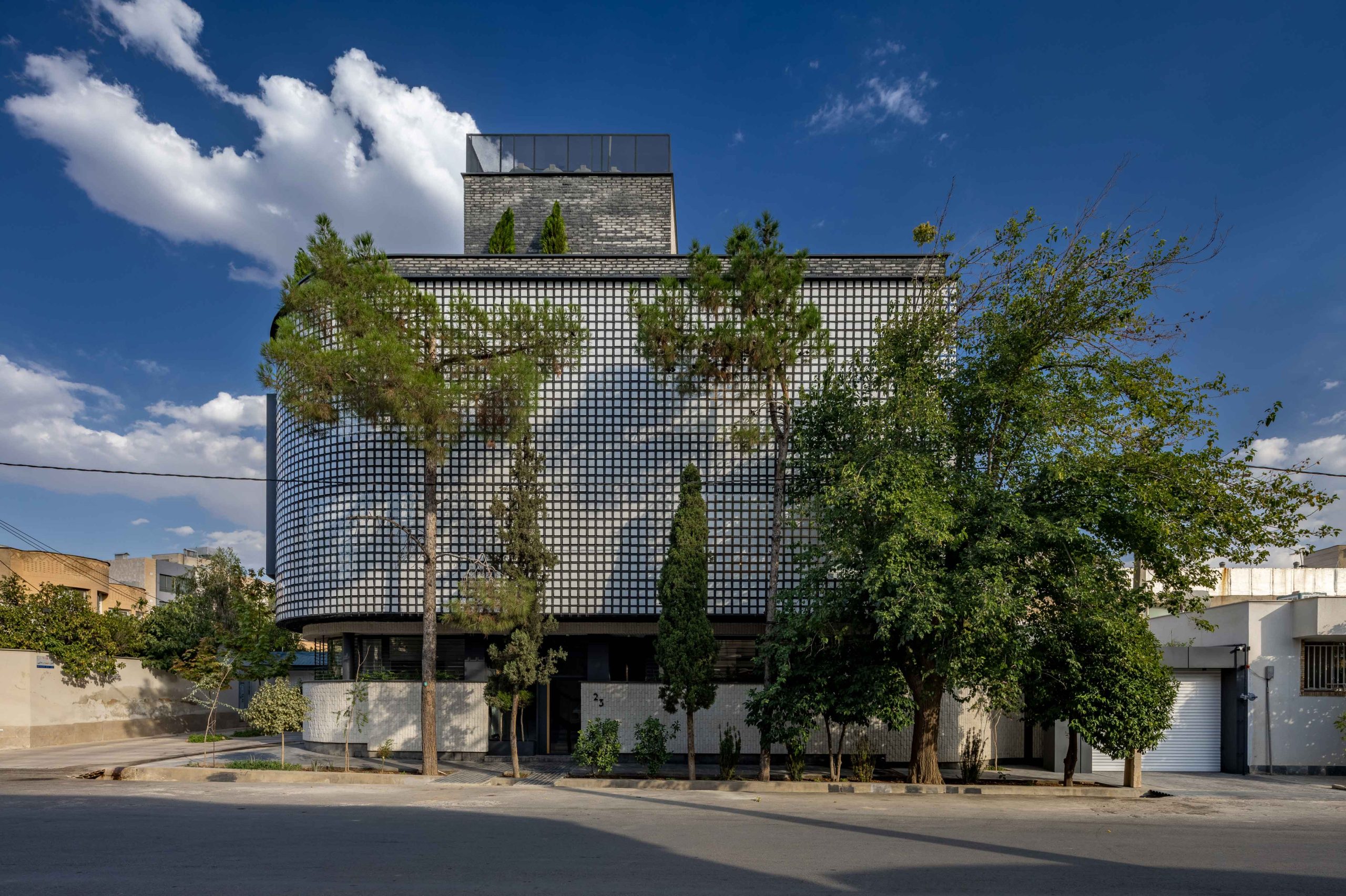
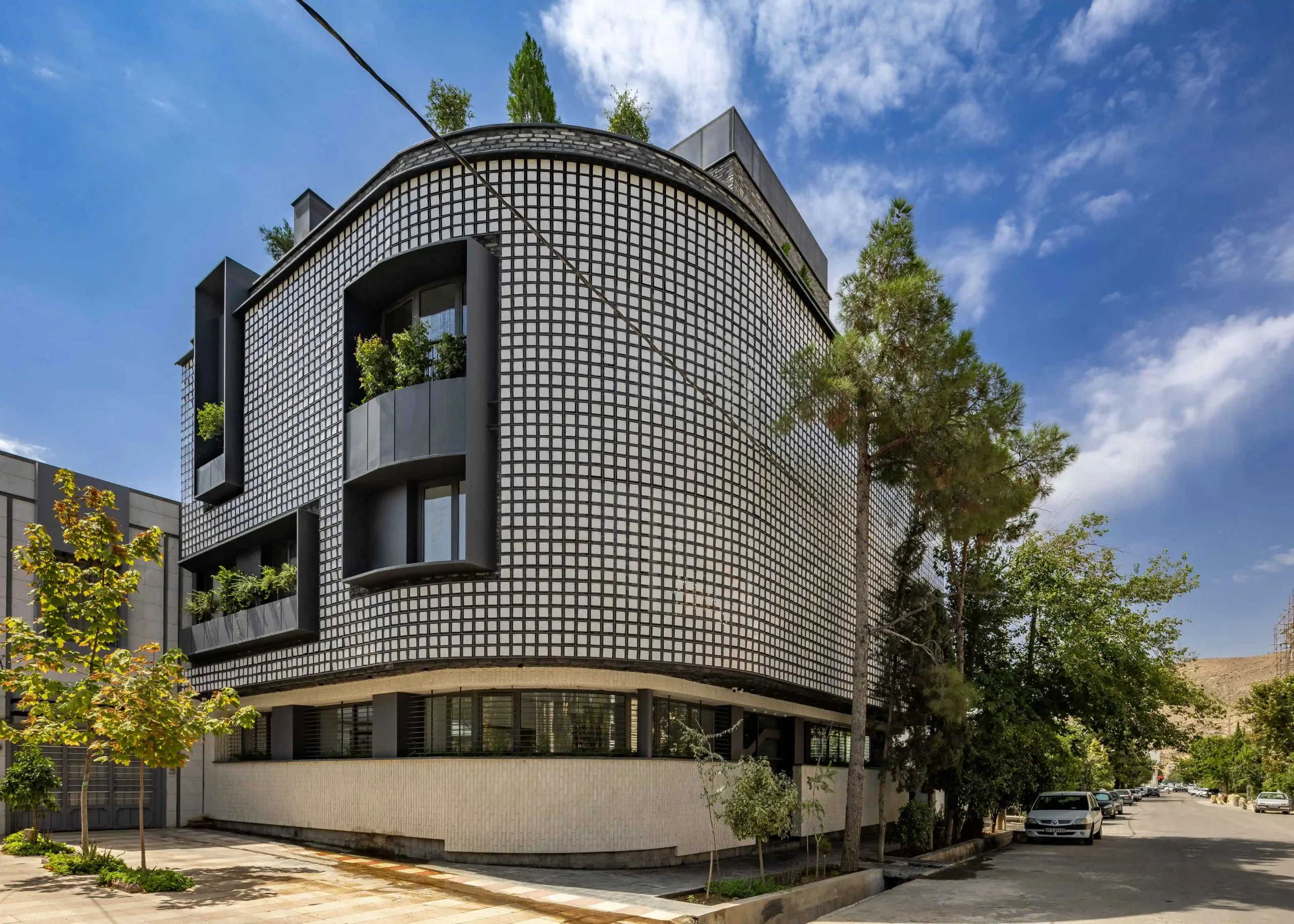
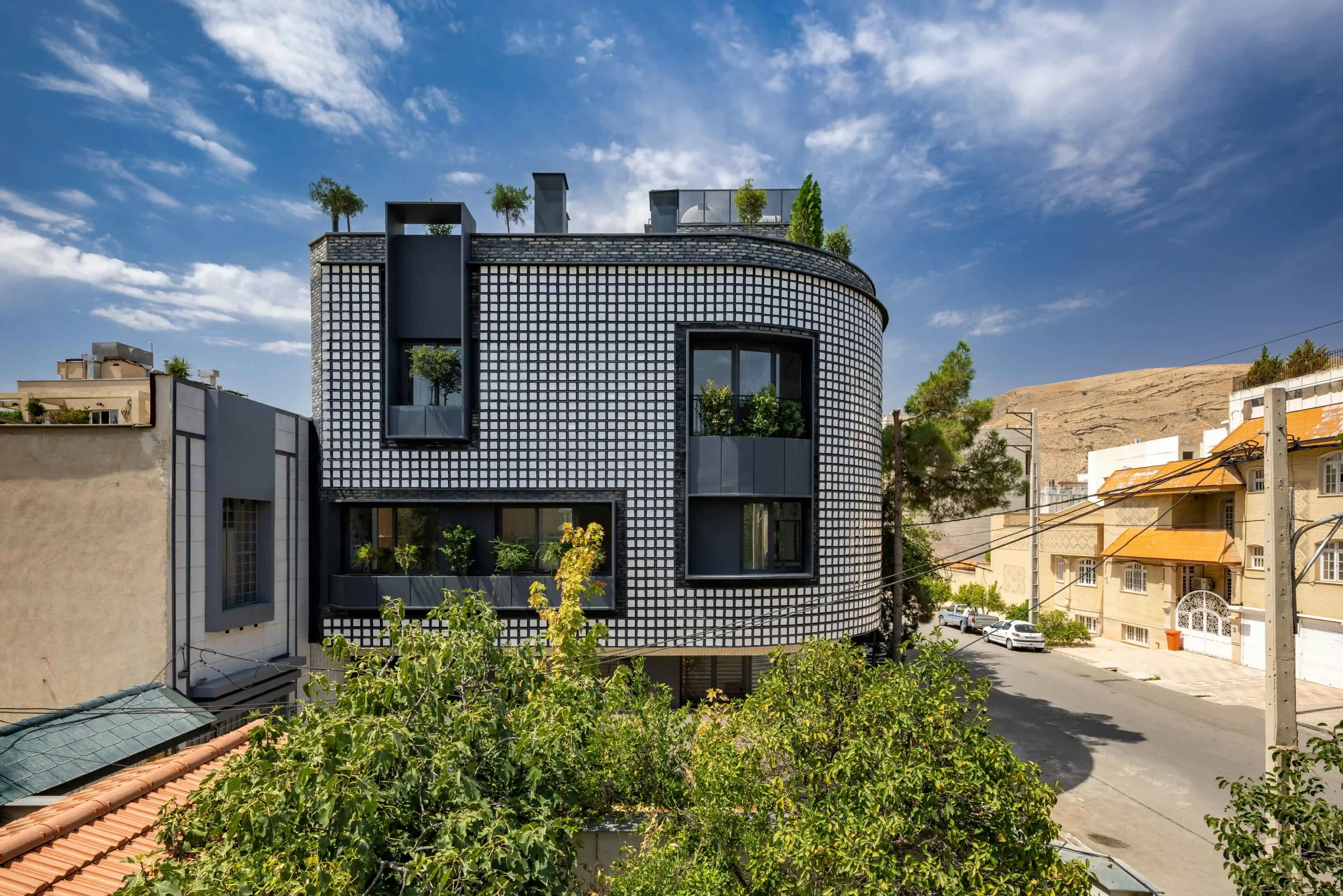
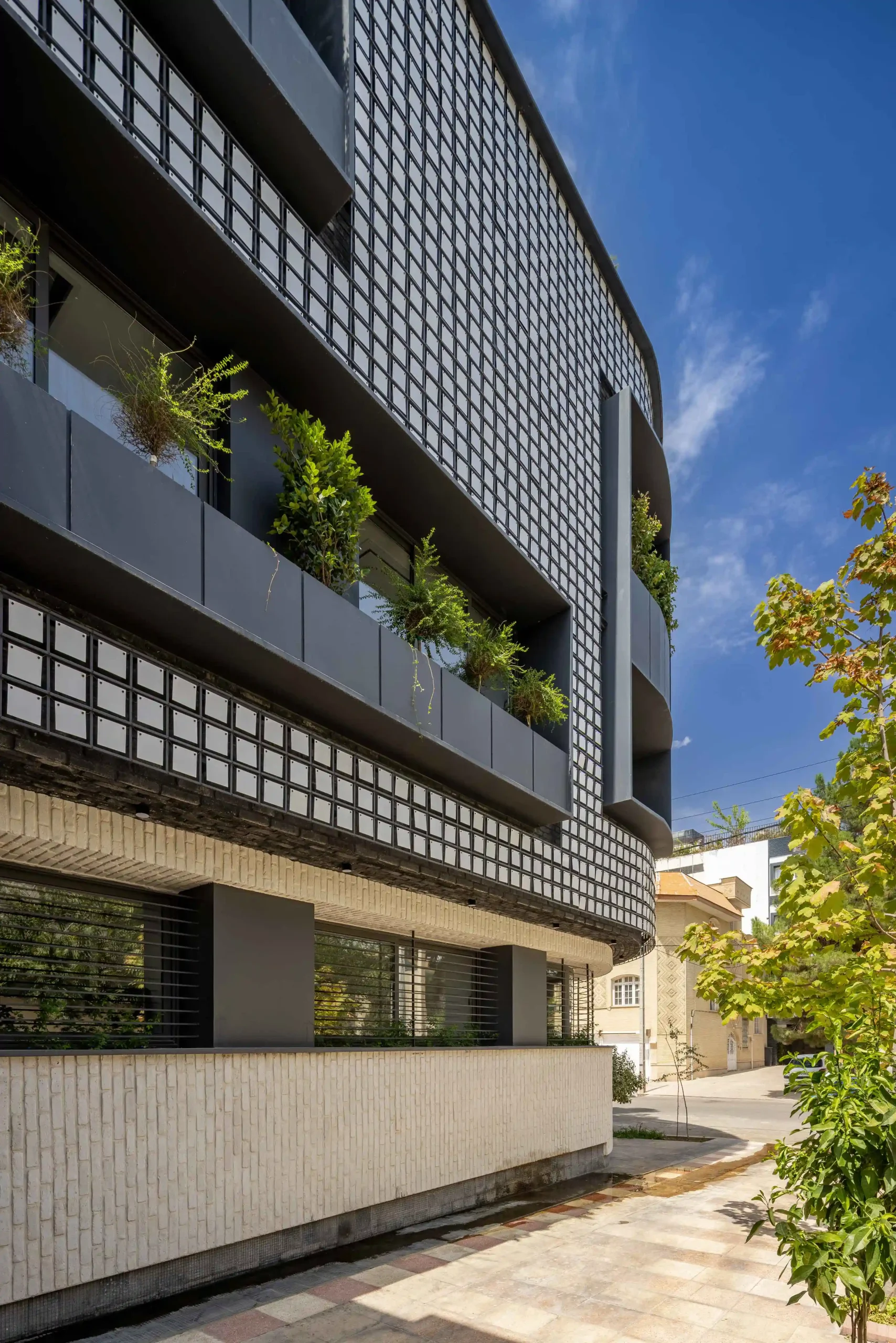
Situated amidst predominantly single-story structures, the challenge of creating a three-story building was met with a sensitive approach to form. The building’s design responds to its context by employing subtle undulations and depressions, aligning its silhouette with the existing skyline. This deliberate gesture ensures continuity with neighboring structures, while also infusing the development with a sense of individuality. Rounded corners at intersecting streets preserve visual cohesion, blending volume seamlessly with surface.
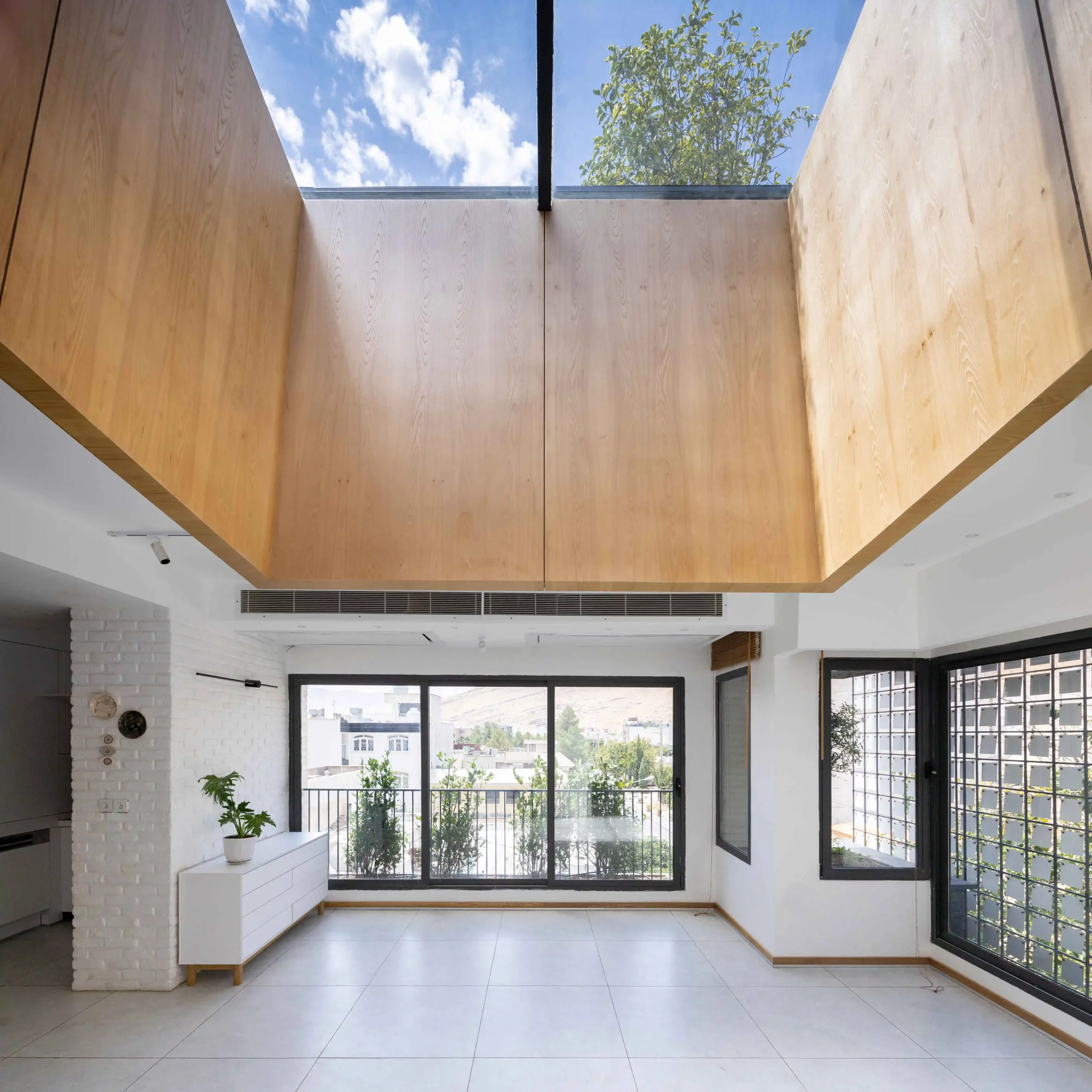
The relationship between indoor and outdoor spaces is carefully curated, with a focus on maximizing natural light and fostering a connection to the environment. Embracing its southern exposure, the building opens generously towards the backyard, inviting sunlight and framing views of the Zagros Mountains. Privacy is maintained through strategic design elements, such as a shell surface on the western facade, which not only shields against harsh sunlight but also serves as a canvas for showcasing the beauty of ancient trees. Behind this shell, residents can enjoy private terraces, offering a retreat from the bustling main street.
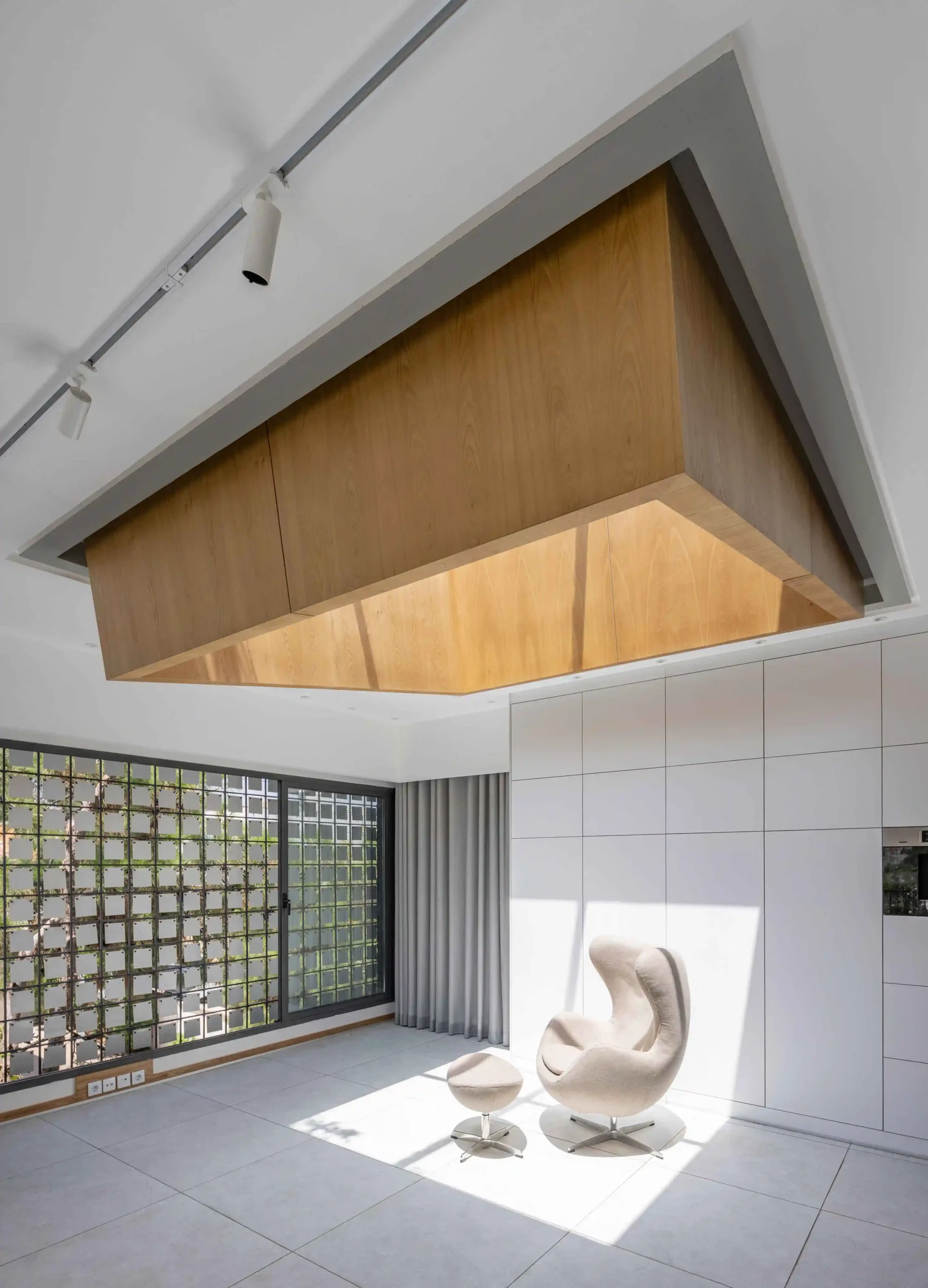
The rooftop serves as an extension of living space, featuring various amenities designed to engage residents and enhance their experience. From kitchen gardens to play areas, the roof transcends its traditional role, becoming a dynamic hub for social interaction and relaxation. Horizontal openings punctuate the roof, inviting glimpses of the sky and infusing interior spaces with natural light and ventilation.
Inspired by the natural dance of leaves in the wind, the building’s exterior shell emerges as a striking testament to both aesthetics and functionality. Utilizing a grid of light and small square surfaces, the shell mimics the fluid motion of foliage, creating a dynamic visual effect that changes with the play of light and shadow. This architectural feature not only adds visual interest but also serves a practical purpose, providing shelter from prevailing winds while engaging the senses of passersby, especially children who are encouraged to explore the interstitial spaces between shell and facade.
In essence, the Downwind Residential Apartment is more than just a place to live; it is a testament to thoughtful design and harmonious integration with its surroundings. From its sculpted form to its dynamic facade, every aspect of the development speaks to a deep understanding of context, community, and the inherent beauty of nature.
The conical shape of the cooling tower, a primary product of the factory, was chosen as the foundational form. This conical design plays a crucial role in unifying the identity both inside and outside. Its slope resonates with adjacent buildings and the surrounding context.
By repetitively adjusting the conical volumes—shifting them forwards, backwards, and in various directions—natural light penetrates from multiple angles, offering enhanced views and crafting a dynamic skyline. On the lower floors, these conical modules are interconnected, ensuring smoother access between them.
Based on the required space, the conical shape, featuring a longitudinal slope, was designed as multi-story. This led to a significant height discrepancy, particularly at the cone’s apex, when compared to the surrounding project area. To mitigate this, sections of the structure, including parking, facilities, and services, were relocated to the basement. To ensure natural light for these spaces and delineate a well-defined open space for the office, sunken gardens were incorporated around the structure to generate various spatial quality . Additionally, vegetation was strategically placed to separate the office space from nearby buildings.
In this project, a paramount consideration was the design of office spaces tailored to employee comfort and satisfaction, cultivating a sense of belonging.
This approach not only enhances individual productivity but also bolsters the factory’s overall output. Recognizing that employees dedicate significant hours within these spaces, and acknowledging the profound influence of the physical environment on performance, it’s vital to address elements that enhance overall well-being and satisfaction.
The design accommodates diverse functional needs. It delineates zones specifically for concentration, collaboration, interaction, and learning. Given the crucial nature of boundaries between these zones, our design strategy integrates a mix of open, closed, and transitional spaces. Each area’s configuration and dimensions were crafted based on its intended function. Emphasis was also placed on ergonomic considerations, safety, health, and thermal comfort, with solutions integrated to cater to each aspect.